Symphony by Wix: AI Agents for Growth and SEO
Module 44: Wix AI Marketing Tools & SEO Automation | Lesson 505 of 683 | 38 min read
By Michael Andrews, Wix SEO Expert UK
Symphony by Wix is a standalone, mobile-first AI app that gives a small business its own team of AI agents. Wix describes it as an intelligent growth engine. Rather than being one more feature buried in the site editor, it is a separate app you run from your phone, and you manage the whole thing by talking to a single AI orchestrator called Maestro in plain language. Maestro gets to know your business, works out what needs doing, and hands each job to a specialist agent built for it.
Before we go any further, one honest point that shapes how you should use it. Symphony is a business growth and operations platform, not a dedicated SEO tool. There is no keyword research feature, no schema builder, no Core Web Vitals fixer inside it. What it does give you is a way to take the time-consuming content, research and marketing work off your plate, and those outputs, handled properly, feed straight into good SEO. This lesson covers what Symphony actually is, how to set it up, how to run it day to day, and exactly where it fits into your SEO workflow, so you use it for what it is good at and keep doing your technical SEO where it belongs.
What Symphony by Wix Is
Symphony sits apart from the Wix site editor. You download it as its own app, and instead of clicking through menus you tell Maestro what you want in ordinary sentences. Maestro is the conductor: it interprets the request, decides which specialist agent should handle it, and can even suggest and start work off its own back once it understands your business. Nothing important happens without you, though. Symphony runs a human approval loop, so before any agent acts it shows you a summary of what it plans to do and waits for your go-ahead. It connects to the tools you already use, including your calendar, email, Slack, Salesforce and the Wix back office, and it surfaces what is going on through visual metrics, a running list of weekly wins, and a short daily brief each morning.
The Agents and What Each One Does
Maestro is the orchestrator at the centre of everything. It learns your business over time, creates the specialist agents you need, delegates work to them, and can even propose tasks proactively once it understands your goals and patterns. Every other agent reports back through Maestro, so you only ever deal with one conversation thread no matter how many agents are working in the background.
The Outreach agent handles reaching out to clients and contacts, including chasing invoices and following up on leads. The Marketing agent creates and runs campaigns, drafts content, and schedules social posts and seasonal email sequences so your marketing runs consistently without you writing every word. The Scheduling agent books and manages appointments and fills gaps in your calendar, keeping your diary productive. The Research agent finds growth opportunities and runs competitor analysis, surfacing data you can act on. The Finance agent tracks revenue, invoices and payments, giving you a clear picture of where the money is. And the Design agent produces branded visuals and can update website content, keeping your site looking fresh without you opening the editor.
Beyond the built-in agents, you can also build your own custom agents with their own tone, rules and focus areas. And Symphony supports external agents from providers such as Shopify and Zendesk, so the platform extends into the tools you already depend on.
How to Set Up Symphony
Getting started with Symphony by Wix
- Download Symphony by Wix from the iOS App Store or the Android Google Play Store.
- Open the app and tap Get Started.
- Create an account with email, Google, Apple, Facebook or your existing Wix login.
- Verify your phone number using the code sent to you by text.
- Answer Maestro's questions about your business so it can build the right agent team for you.
- Turn on notifications so you get progress updates.
- Optionally connect your tools now (calendar, email, Wix back office and others). You can add these at any time, so skip it for now if you would rather get going.
How to Use Symphony Day to Day
Running Symphony as part of your daily workflow
- Tap the Chat icon and tell Maestro what you need in plain language.
- Use the Plus icon to attach a photo or file if it helps explain the task.
- Read the summary Maestro proposes and approve it before any agent starts work.
- Open the Home section to see each agent's status and completed work, tap any item for the detail, and chat with Maestro to adjust or approve.
- Check the daily brief for an automatic summary of what happened while you were away.
AI Credits and Cost
Chatting with Maestro is free. It is the background agent work (completing tasks, running outreach, doing research) that uses AI credits. You can see your balance in the menu and top it up by upgrading your plan when you need more. One thing worth knowing so it does not throw you: credit deductions can take up to fifteen minutes to show, so the balance is not always instant.
How to Use Symphony to Support Your SEO
Symphony has no technical-SEO features. There is no way to edit meta tags, add structured data, run a site audit or fix page speed issues inside it. That is not what it is for. However, three of its agents still feed directly into good SEO practice when you use them deliberately.
Use the Research agent for competitor analysis and to surface growth opportunities, and treat what it finds as raw input for your keyword and content strategy rather than a finished plan. A prompt like "Research what my top three competitors rank for that I don't, and summarise the content gaps" gives you something concrete to work from when you sit down to plan your next round of content.
Use the Marketing agent to draft content and plan campaigns and social posts, which builds the brand signals and off-site activity that support rankings. A prompt like "Draft a four-email seasonal sequence for my service, and suggest three blog topics my customers are searching for" is a good start. The agent does the first-draft heavy lifting; you apply your SEO knowledge to the output.
Use the Design agent to keep pages looking fresh and to produce visuals, since well-maintained, visually engaging pages help with user engagement signals. And because Symphony connects to the Wix back office, its proactive intelligence can flag things worth acting on, such as checkout drop-off or a seasonal opportunity coming up, that you might otherwise miss.
The key discipline is this: everything an agent drafts still needs your SEO review before you approve it. Check that the title stays under 60 characters and the meta description under 155. Confirm the content targets a real search term. Make sure you are not creating thin or duplicate pages. The human approval loop that Symphony builds into every action is the exact moment you apply that judgement. Use it.
What Symphony Does Not Do
It will not do your technical SEO, add structured data, fix Core Web Vitals, map your keywords, or change your Wix SEO settings for you. It is a growth and operations assistant, not a ranking tool. Use it to win back time on content, research and marketing, then apply proper SEO to whatever it hands you. The rest of this course covers every one of those technical disciplines in detail. Symphony just makes the surrounding work faster so you can focus where it counts.
Sources and Further Reading
- Symphony: An Overview: Wix Help Center overview of Symphony and its agent system
- Symphony: Using the App: Wix Help Center guide to day-to-day Symphony usage
- Wix Blog: Symphony Features: Wix blog deep-dive on Symphony capabilities
- Symphony by Wix: Official Symphony product page
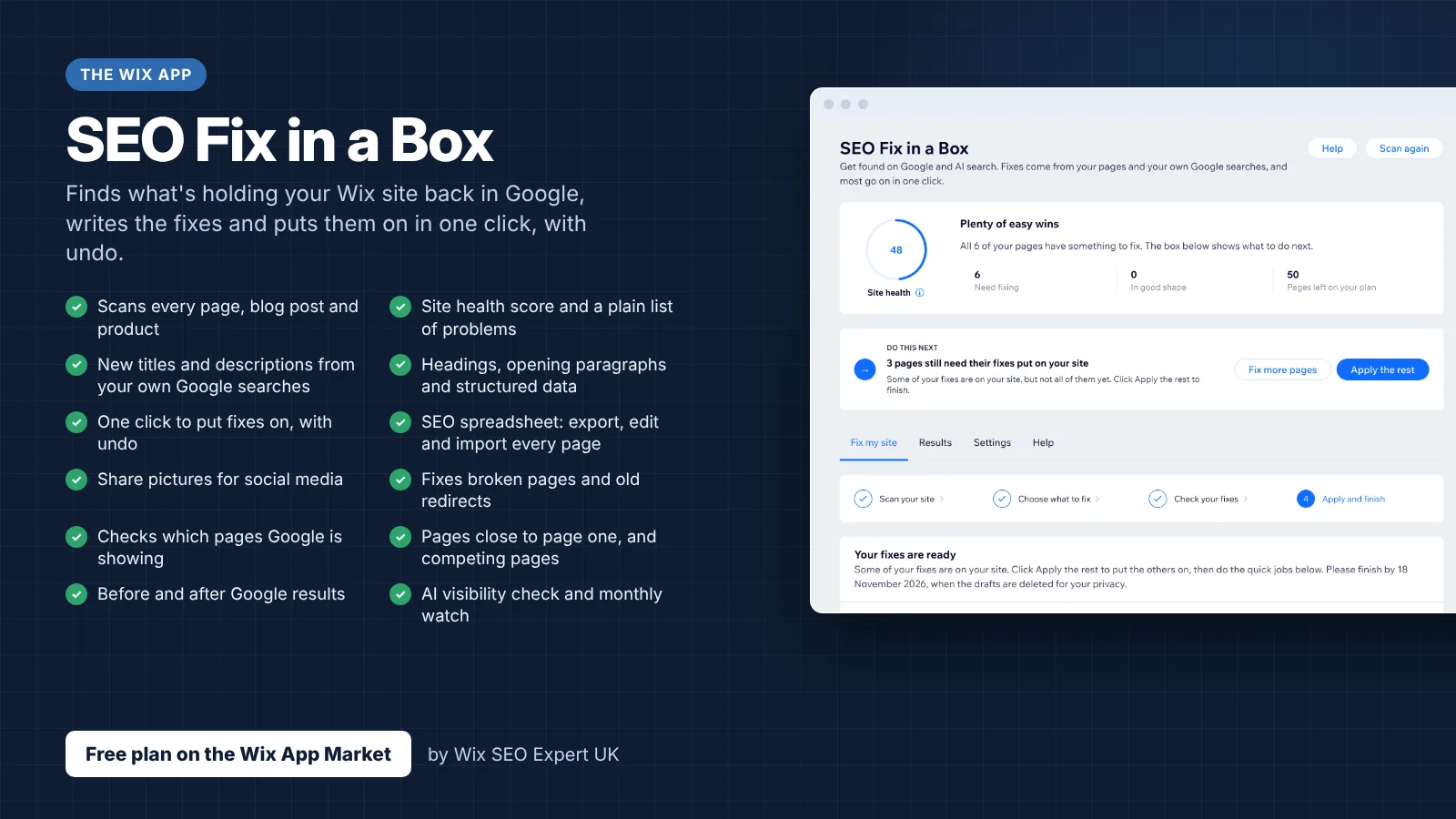
- SEO Fix in a Box: My Wix app. Free to install, it scans your site and shows what needs fixing, and paid plans write the fixes from your own Google searches
Was this lesson useful?
It takes 1 minute to tell me. The course is free and I want to keep it that way, and your feedback shows me what is working and helps other people find it.
This lesson on Symphony by Wix: AI Agents for Growth and SEO is part of Module 44: Wix AI Marketing Tools & SEO Automation in The Most Comprehensive Complete Wix SEO Course in the World (2026 Edition). Created by Michael Andrews, a Wix Marketplace Legend Partner with 14 years of hands-on experience, 800 completed Wix SEO projects and 456 verified five-star reviews.