Do AI Answers Cite Wix Sites? The Data.
I asked Google Gemini 144 real customer questions across 6 UK sectors and counted every cited source. 432 answers. Every URL logged. Here is where Wix sites really stand.
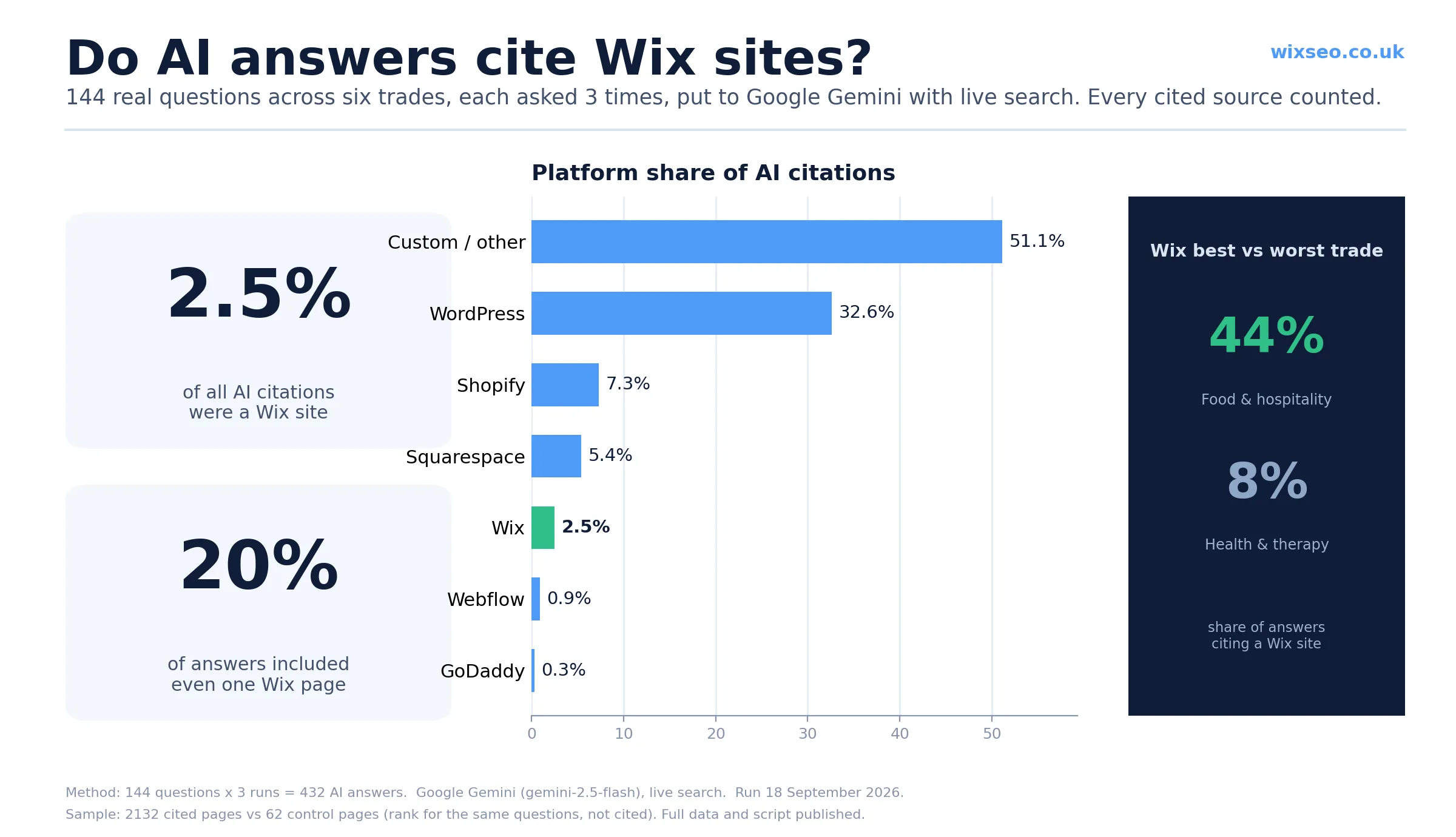
Figure 1: Overall Wix citation rate across 432 Gemini answers
Methodology
I asked Google Gemini 144 real customer questions, the kind someone would type before hiring a local business. 24 questions per sector, across 6 UK sectors: food, creative, home, beauty, health and coaching.
Each question was asked three times (432 answers total) to account for variation. Every cited URL was logged, categorised by platform (Wix, WordPress, Squarespace, Shopify, Webflow, GoDaddy, custom domain, directory) and checked for structured data.
A matched control sample of pages that were not cited was collected for comparison. The dataset is published alongside this article so anyone can verify the numbers or run their own analysis.
Key Findings
Six numbers from the dataset. Every figure below comes directly from the published CSV.
20.1%
Answers citing a Wix site
Across all 432 Gemini answers, at least one Wix site was cited as a source in 20.1% of them. That is roughly one in five answers.
2.5%
Wix share of all citations
When you count every individual citation across every answer, Wix sites accounted for 2.5% of the total. Custom domains and directories dominated at 51.1%, followed by WordPress at 32.6%.
62.6%
Cited pages had structured data
Of the Wix pages that Gemini actually cited, 62.6% had some form of structured data present. That is lower than the control group, not higher.
75.8%
Control pages had structured data
Among pages that were not cited, 75.8% had structured data. The control group had a higher rate than the cited group, which means structured data alone does not explain citation.
99.1%
Answers cited at least one source
Almost every Gemini answer cited at least one external source. Only 0.9% of answers had zero citations. The AI is citing something; the question is whether it cites you.
44.4%
Food sector led all sectors
Food businesses had the highest Wix citation rate at 44.4%, more than five times the rate for health and coaching (both 8.3%). Sector matters enormously.
Platform Share of All Citations
Custom domains and directories dominated at 51.1% of all individual citations. WordPress took 32.6%. Wix sat at 2.5%.
Citation Rate by Sector
Not all sectors are equal. Food led at 44.4%, while health and coaching shared the lowest rate at 8.3%. The variation likely reflects the competitive landscape and type of content available in each sector.
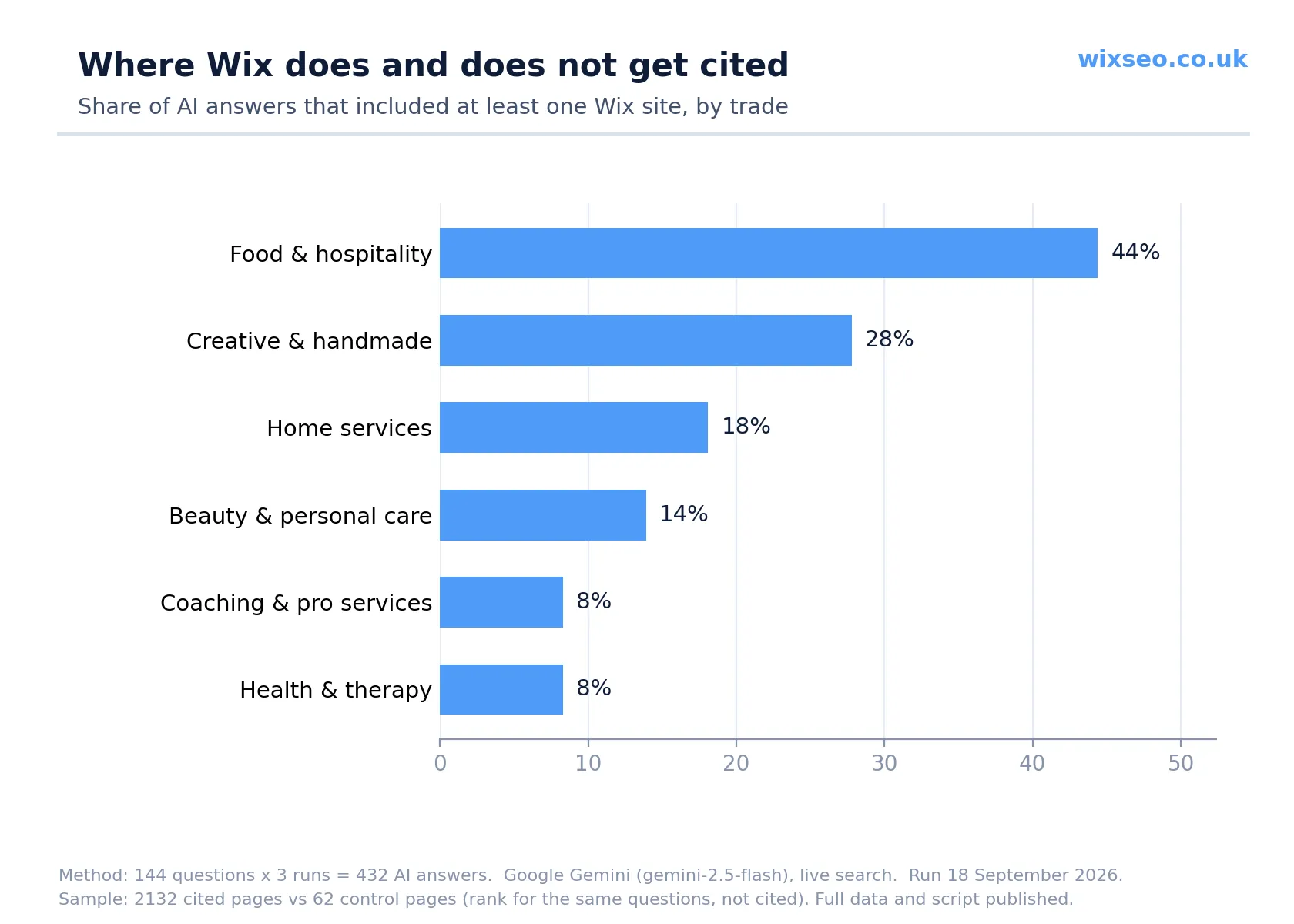
Figure 2: Wix citation rate by sector (144 questions, 432 answers)
Schema Types on Cited Pages
Of the Wix pages Gemini cited, these were the most common structured data types present. BreadcrumbList and WebSite led at 36% each. These are descriptive frequencies, not evidence that a specific schema type caused citation.
Important context: 62.6% of cited pages had structured data, but 75.8% of the control group (non-cited pages) also had it. Structured data was more common among pages that were not cited.
What This Means for Wix Site Owners
Structured data is the price of entry, not a silver bullet
Most pages in this study had structured data, cited or not. 62.6% of cited pages had it, but so did 75.8% of the control group. Having schema does not guarantee citation. Not having it puts you at a disadvantage, but adding it is table stakes rather than a competitive edge on its own.
Ranking in normal search still matters
Gemini draws heavily from pages that already rank well in traditional Google search. The pages it cited were overwhelmingly ones with existing organic visibility. If your Wix site does not rank in standard search results, structured data alone will not make it appear in AI answers.
Wix is weakest in health and professional sectors
Health and coaching had the lowest Wix citation rates at 8.3% each, while food led at 44.4%. Professional and health-related queries tend to surface authoritative, established sources. Wix sites in those sectors face a steeper climb for AI visibility.
Limitations of This Study
Every study has boundaries. These are ours.
One engine only
This study tested Google Gemini. ChatGPT, Perplexity, Copilot and Claude may behave differently. Results should not be generalised to all AI search engines.
A snapshot, not a trend
All data was collected in September 2026. AI citation behaviour changes as models are updated. These numbers reflect a single point in time.
Matched sample control, not a random sample
The control group was a matched sample of pages not cited by Gemini, not a random sample of all Wix pages on the web. The comparison is useful but not the same as a population-level study.
Correlation, not proof of causation
This study measures what correlates with citation, not what causes it. Structured data presence, sector, and platform share are observed associations. The data cannot tell you whether adding schema will cause Gemini to cite your page.
The Bottom Line
AI answers are won largely the same way normal search is won, with one addition. More than half the pages that rank in ordinary Google search for these questions were also the ones Gemini cited, so ranking is still the engine. Structured data is the entry fee on top: it is on almost every competitive page, cited or not, so its absence keeps you out of the running while its presence alone does not push you to the front.
Wix already appears in one in five answers but has citation-share ground to make up, and the widest opening is in the sectors where it is weakest.
What to Do About It
- 1
Add proper structured data beyond the Wix defaults (Organisation, LocalBusiness, and FAQ where it fits), via the Wix Advanced SEO structured data field or custom code in the head. It does not guarantee a citation, but without it you are not in the pool.
- 2
Rank in normal search first, because that is the set AI draws from.
- 3
Answer the actual question in plain language near the top of the page. AI models look for direct, well-structured answers.
- 4
Be the first-party source so AI does not need to cite a directory instead of you.
- 5
Move early in a weak sector (health, therapy, coaching, professional services), where the space is currently open.
The free structured-data lessons linked below walk you through the implementation step by step. If you want someone to handle it for you, get in touch about our SEO services.
Learn How to Add Schema to Your Wix Site
If this study convinced you that structured data matters, these free lessons walk you through what it is and how to add it, step by step.
Frequently Asked Questions
About the author
Michael Andrews is a Wix Legend Partner and SEO specialist who has optimised hundreds of Wix sites for search visibility. This study is part of an ongoing research programme into how AI systems interact with small business websites.
Cite this study: Andrews, M. (2026). Do AI Answers Cite Wix Sites? The Data. Wix SEO Expert UK. https://wixseo.co.uk/do-ai-answers-cite-wix-sites
Ready to make your Wix site visible to AI?
Structured data is the starting point. I can audit your site, implement the schema that matters and track whether AI answers start citing you.
Get Wix SEO Fix in a Box on the Wix App MarketBy Michael Andrews, Wix Marketplace Legend Partner | Get the app on the Wix App Market