Content strategy and storytelling for nonprofit SEO on Wix
Module 37: SEO for Nonprofits & Charities on Wix | Lesson 431 of 683 | 48 min read
By Michael Andrews, Wix SEO Expert UK
Nonprofits have something most businesses do not: deeply human stories. Every charity exists because of a real-world problem affecting real people. Your content strategy should harness the power of storytelling to engage audiences, rank in search results and drive action. This lesson covers how to build an SEO-driven content strategy that tells your organisation's story while targeting the keywords that bring new supporters to your Wix site.
The Nonprofit Content Advantage
Charities are uniquely positioned for content marketing because their work generates an endless supply of compelling stories. Beneficiary journeys, volunteer experiences, programme outcomes and community transformations are the type of content that earns engagement, shares and backlinks naturally. When you combine these stories with keyword research and SEO best practices, you create content that both ranks and resonates.

Defining Your Content Pillars
Content pillars are the 4-6 core themes that all your content should revolve around. For nonprofits, these typically align with your programmes, your cause area and the needs of your audience segments. Every blog post, page and social media update should connect to one of your content pillars.
- Pillar 1 - Cause Education: explain the problem your nonprofit addresses, its root causes, its scale and why it matters
- Pillar 2 - Programme Impact: showcase what your programmes achieve with real numbers, beneficiary stories and outcome data
- Pillar 3 - Ways to Help: content for donors, volunteers, advocates and partners explaining how they can contribute
- Pillar 4 - Community Stories: spotlight beneficiaries, volunteers, staff and supporters who bring your mission to life
- Pillar 5 - Resource Guides: practical information for people affected by the issues you address
- Pillar 6 - Sector Insights: thought leadership on trends, policy changes and best practices in your cause area
SEO-Driven Storytelling Framework
Creating stories that rank and convert
- Start with keyword research: identify what your audiences search for related to your cause and services
- Map each target keyword to one of your content pillars to ensure strategic alignment
- For each article, identify the primary keyword (in the title), secondary keywords (in subheadings) and related terms (in body text)
- Write headlines that combine emotional storytelling with search intent: "How One Meal Changed Everything: Inside Our Food Bank Programme" targets "food bank programme" while hooking readers
- Structure every article with H2 and H3 headings that include secondary keywords naturally
- Include a clear call to action in every piece of content: donate, volunteer, share, sign up, learn more
- Add internal links to related programme pages, donation page and other relevant blog posts
- Optimise images with descriptive alt text and compress them for fast loading
Types of Content That Perform Best for Nonprofits
- Beneficiary stories: first-person accounts of how your organisation changed someone's life (with consent and sensitivity)
- Impact reports: data-driven articles showing programme outcomes with infographics and statistics
- How-to guides: practical resources for people affected by the issues you address ("How to Apply for Emergency Housing Assistance")
- Expert commentary: position your staff as thought leaders on cause-related policy and trends
- Seasonal giving guides: "Year-End Giving Guide", "How to Maximise Your Charitable Impact This Christmas"
- Awareness content: in-depth articles about the causes and scale of the problems you address
- Behind-the-scenes: show how donations are used, what a day at your organisation looks like, how programmes operate
- Volunteer recruitment stories: "A Day in the Life of a [Charity] Volunteer" with authentic photos and quotes
Ethical Storytelling Guidelines
Nonprofit storytelling carries ethical responsibilities that businesses do not face. You are often telling the stories of vulnerable people. Your content must respect dignity, obtain informed consent and avoid exploitative imagery or narratives. Ethical storytelling builds trust, and trust is a core SEO signal under Google's E-E-A-T framework.
- Always obtain written consent before sharing a beneficiary's story, photo or personal details
- Offer story subjects the opportunity to review and approve content before publication
- Avoid "poverty porn" or imagery designed to shock; instead, focus on agency, resilience and hope
- Use real first names only with permission; offer anonymity or pseudonyms as options
- Represent the communities you serve accurately without reinforcing stereotypes
- Update or remove stories when a beneficiary's circumstances change or they withdraw consent
- Credit photographers and storytellers appropriately
Content Calendar and Publishing Frequency
Consistency matters more than volume for nonprofit SEO. Publishing one well-researched, well-optimised blog post per week is more effective than publishing five thin articles per month. Align your publishing schedule with your capacity and prioritise quality.
- Minimum effective frequency: 2 blog posts per month for SEO traction on a Wix site
- Optimal frequency: 1 blog post per week covering different content pillars in rotation
- Repurpose content across formats: turn blog posts into email newsletters, social media threads and GBP posts
- Schedule content around awareness dates, giving seasons and annual campaigns at least 6 weeks in advance
- Maintain an evergreen content library that ranks year-round alongside timely seasonal content
- Review and update top-performing posts annually to maintain rankings and accuracy
Measuring Content Performance
Tracking your content strategy results
- Set up Google Analytics 4 goals for each conversion type: donations, volunteer sign-ups, newsletter subscriptions, service enquiries
- Track which blog posts drive the most organic traffic using Google Search Console Performance report
- Measure conversion rate by content type: which stories, guides or reports drive the most donations or sign-ups
- Monitor keyword rankings for your target terms using a tool like Semrush, Ahrefs or free Google Search Console data
- Track backlinks earned by each piece of content to identify what type of content attracts links naturally
- Report content ROI to your board: total organic traffic, conversions attributed to content and estimated value of earned media
Content Strategy Tools
- Google Trends: Research seasonal search trends for cause-related topics
- AnswerThePublic: Discover questions people ask about your cause area
- Hemingway Editor: Simplify your writing for broader accessibility and better engagement
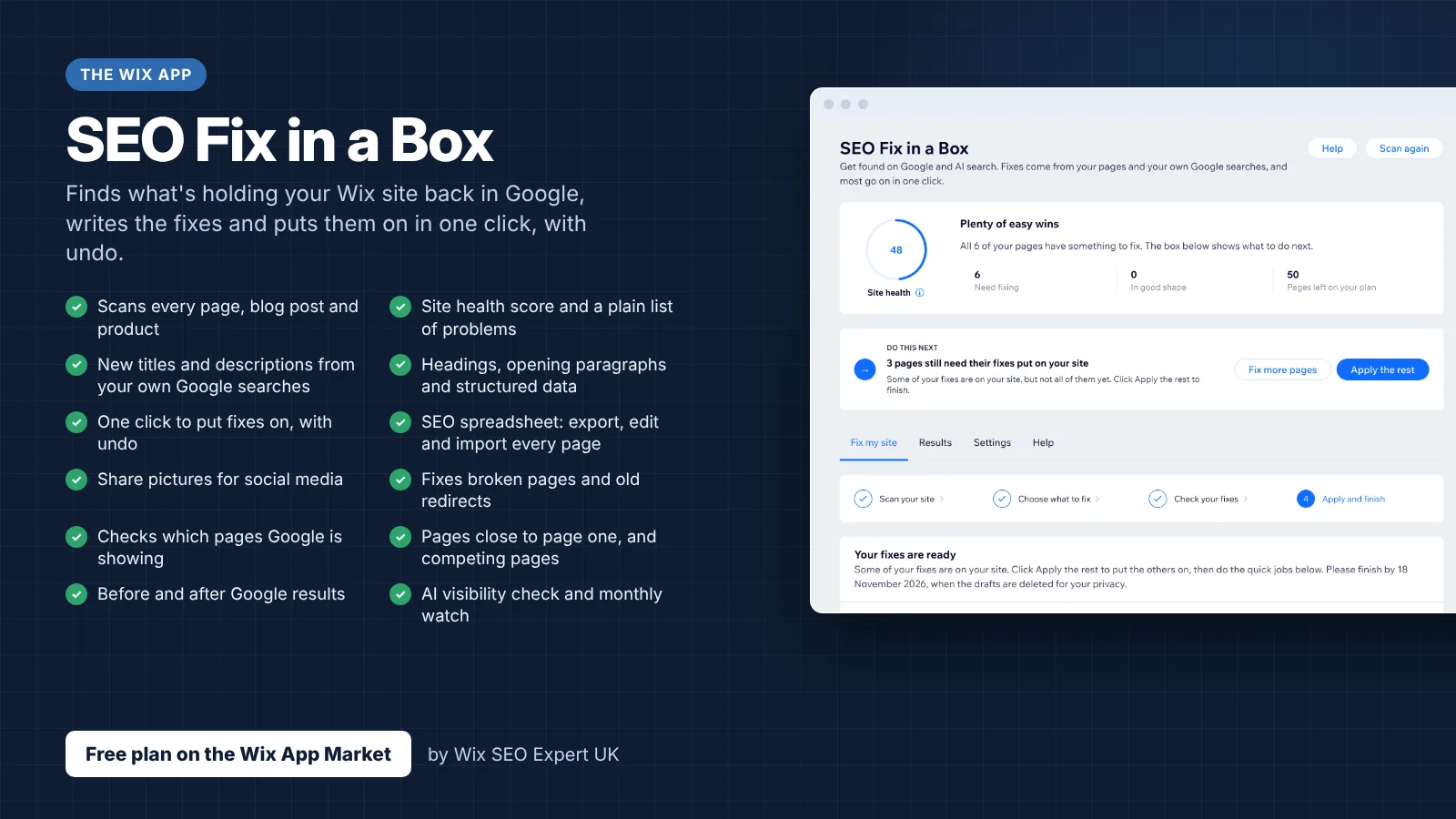
- SEO Fix in a Box: My Wix app. Free to install, it scans your site and shows what needs fixing, and paid plans write the fixes from your own Google searches
Was this lesson useful?
It takes 1 minute to tell me. The course is free and I want to keep it that way, and your feedback shows me what is working and helps other people find it.
This lesson on Content strategy and storytelling for nonprofit SEO on Wix is part of Module 37: SEO for Nonprofits & Charities on Wix in The Most Comprehensive Complete Wix SEO Course in the World (2026 Edition). Created by Michael Andrews, a Wix Marketplace Legend Partner with 14 years of hands-on experience, 800 completed Wix SEO projects and 456 verified five-star reviews.