Setting client expectations and managing difficult conversations
Module 52: SEO Audits, Client Work & Going Pro | Lesson 574 of 683 | 40 min read
By Michael Andrews, Wix SEO Expert UK
The technical skills of SEO are only half the battle when working with clients. The other half is managing expectations, communicating complex concepts in simple language, handling difficult conversations when results are slow, preventing scope creep, and knowing when a client relationship is no longer viable. These soft skills are rarely taught in SEO courses, yet they are the number one reason SEO professionals either build thriving practices or burn out within a year. This lesson covers every client management scenario you will encounter, with scripts, frameworks, and strategies drawn from years of real consulting experience.
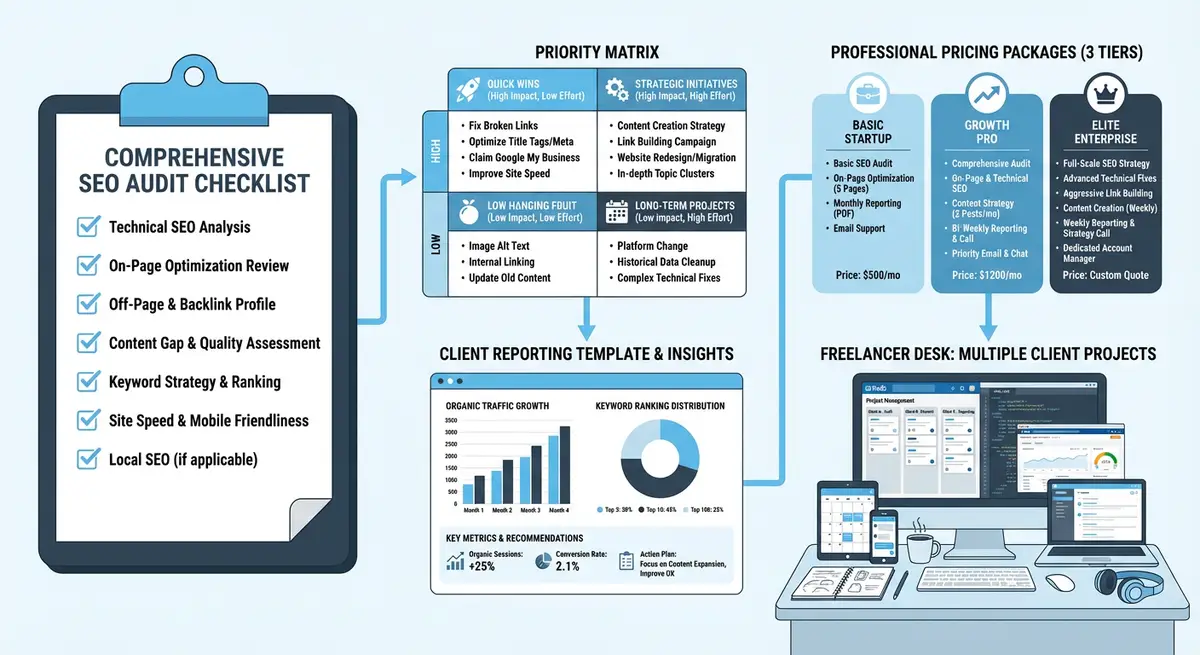
The Initial Expectations Conversation: Setting the Foundation
The expectations conversation must happen before any work begins. Most client relationship failures can be traced back to misaligned expectations that were never addressed upfront. You need to cover timeline expectations, result expectations, communication frequency, scope boundaries, and what happens if things do not go to plan.
Timeline Expectations
SEO is not instant. This is the single most important message to communicate to every new client. Clients come from a world of paid advertising where results are immediate, and they naturally expect the same from SEO. Setting realistic timelines upfront prevents disappointment and preserves the relationship when months two and three arrive without dramatic ranking changes.
- Month 1: audit, technical fixes, and quick wins. Clients may see minor improvements in indexing and a few ranking bumps from title tag and content optimisations.
- Months 2-3: content development and on-page optimisation. Rankings begin to move for less competitive keywords. Traffic increases are small but measurable.
- Months 3-6: authority building and content expansion. Rankings improve for more competitive keywords. Traffic growth becomes consistent and compounding.
- Months 6-12: established authority and sustained growth. The site competes for primary keywords. Organic traffic shows significant year-over-year improvement.
- Important: these timelines assume a reasonably healthy domain. Brand new sites or penalised sites take longer.
Result Expectations
Never promise specific rankings. This is a non-negotiable rule. Google controls rankings, and no SEO professional can guarantee a specific position for any keyword. Instead, frame results around outcomes that you can influence: organic traffic growth, improvement in keyword visibility, and increases in enquiries or sales from organic channels.
- Promise: "We will improve your organic visibility and traffic through systematic optimisation."
- Do not promise: "We will get you to position 1 for [keyword]."
- Promise: "We will target specific keywords and measure ranking improvements over time."
- Do not promise: "You will see a 300% traffic increase in 3 months."
- Promise: "We will provide monthly reports showing measurable progress against defined KPIs."
- Do not promise: "This will definitely generate X new leads per month."
Explaining SEO Timelines: Why It Takes Months, Not Days
Clients need to understand WHY SEO takes time, not just that it does. Explaining the mechanics behind the timeline builds trust and patience. Use analogies that relate to the client's industry or experience.
The Analogy Toolkit
- The library analogy: "Google is like a massive library with billions of books. Getting your book into the library (indexing) is step one. Getting it recommended by the librarian (ranking) requires establishing that your book is the most relevant, authoritative, and useful for the question being asked. That reputation builds over time."
- The fitness analogy: "SEO is like starting a fitness programme. You will not see visible results after one workout. But after 30 sessions, the changes start showing. After 90, they are unmistakeable. And if you stop, you gradually lose the progress. Consistency is the key."
- The garden analogy: "SEO is like planting a garden. We plant seeds (content), tend the soil (technical SEO), and water regularly (ongoing optimisation). Some seeds sprout quickly, others take seasons. But once the garden is established, it produces results with less effort than it took to plant."
- The investment analogy: "SEO is like investing in the stock market. The first few months might look flat or even show small declines. But over 6-12 months, the compound growth becomes significant. The key is staying invested and not pulling out after a bad month."
Monthly Reporting: What to Include and How to Present It
Monthly reports are your primary communication tool with clients. A good report builds trust, demonstrates value, and preempts difficult conversations. A bad report either overwhelms with data or fails to show meaningful progress.
The Ideal Monthly Report Structure
Monthly report sections
- Executive Summary (1 paragraph): what we did this month, key results, and what we are doing next. Written in plain language a non-technical person can understand.
- KPI Dashboard: 3-5 key metrics with trend charts showing month-over-month and year-over-year progress. Organic sessions, keyword positions, conversions from organic.
- Work Completed: bullet list of specific tasks completed this month with brief explanations of why each matters.
- Results and Insights: highlight specific wins (keywords that improved, pages that gained traffic) with context on why they improved.
- Challenges and Responses: be transparent about anything that did not go as planned and what you are doing about it. Hiding bad news destroys trust.
- Next Month Plan: specific tasks planned for the coming month, building on this month's progress.
- Appendix (optional): detailed data tables for clients who want to dig deeper.
Handling Negative Feedback and Slow Results
Every SEO professional will face conversations where clients are unhappy. Rankings dropped unexpectedly, traffic is flat, a competitor surged ahead, or the client simply expected faster results. How you handle these conversations determines whether the relationship survives.
The LAER Framework for Difficult Conversations
- Listen: let the client express their concern completely without interrupting. Acknowledge their frustration before responding.
- Acknowledge: "I understand your concern about the traffic plateau. Let me explain what is happening and what we are doing about it."
- Explain: provide context with data. "Google released an algorithm update on March 15 that caused ranking fluctuations across the industry. Our competitors were also affected. Here is the data showing the industry-wide impact."
- Resolve: present a clear action plan. "Here are the three specific steps we are taking this month to address this. We will provide a progress update in 14 days."
Common Difficult Scenarios and Responses
- "My competitor ranks above us": "Let me analyse exactly why they rank higher. Often it is a combination of factors we can address: content depth, backlink profile, or technical advantages. I will provide a competitive analysis with specific actions to close the gap."
- "We are not seeing results yet": "Let me show you the leading indicators that confirm we are on the right track: improved indexing, keyword movements from page 3 to page 2, and increased impressions. These leading indicators predict traffic growth in the coming months."
- "A Google update dropped our rankings": "Algorithm updates affect every site differently. Let me analyse what changed, identify any specific pages or factors that were affected, and adjust our strategy accordingly. This is a normal part of SEO that we are equipped to handle."
- "Can we just do PPC instead?": "PPC and SEO serve different purposes. PPC provides immediate visibility but costs per click. SEO builds a permanent traffic asset that generates visits without ongoing ad spend. The most effective approach is using PPC for immediate needs while building organic presence for long-term ROI."
Scope Creep: Identifying and Preventing It
Scope creep is the gradual expansion of project requirements beyond the original agreement. In SEO, it often manifests as clients requesting additional services (social media management, content writing, web design changes) without corresponding budget increases. Left unchecked, scope creep destroys profitability and leads to burnout.
Preventing Scope Creep
Scope management protocol
- Define scope explicitly in your contract: list exactly what is included and what is not included
- Create a "scope boundary" document that both parties sign, listing out-of-scope items specifically
- When a client requests something outside scope, acknowledge the request and then say: "That is a great idea and I would love to help with it. It falls outside our current scope, so let me put together a separate proposal for that work."
- Track time spent on each client to identify scope creep early (if you are consistently exceeding budgeted hours, scope has crept)
- Review scope quarterly with each client to realign expectations and adjust contracts if the work has genuinely expanded
- Never say "no" outright. Always redirect to "yes, with an adjusted scope and budget"
When to Fire a Client
Not every client relationship is worth maintaining. Some clients are toxic to your business, your team, and your mental health. Knowing when to end a relationship is as important as knowing how to start one. Firing a client is not a failure; it is a business decision that protects your capacity to serve your good clients well.
Signs It Is Time to End the Relationship
- The client consistently ignores your recommendations then blames you for lack of results.
- Payment is consistently late or disputed despite completed work.
- The client is abusive, disrespectful, or creates a hostile working environment.
- Scope has expanded so far beyond the original agreement that the project is unprofitable.
- The client makes unrealistic demands (guaranteed rankings, overnight results) despite repeated expectation setting.
- The client bypasses your work by making unauthorised site changes that undo your optimisations.
- The emotional cost of managing the relationship outweighs the financial benefit.
How to End a Client Relationship Professionally
Professional client offboarding
- Give adequate notice (typically 30 days) unless the situation requires immediate termination
- Frame the conversation around fit, not blame: "I do not think our current arrangement is delivering the best results for either of us"
- Offer to help with the transition: provide documentation, access to accounts, and a summary of work completed
- Document everything: final report, access credentials, outstanding tasks, and any recommendations for their next provider
- Be professional and gracious regardless of the circumstances. Your reputation is more valuable than the last word.
- Invoice for any outstanding work before the final conversation
Creating Bulletproof Contracts and Scope Documents
A well-written contract prevents most client management problems before they start. Your contract must protect both parties, set clear boundaries, and create accountability. Investing in a proper contract template is one of the best business decisions you will make.
Essential Contract Clauses for SEO Engagements
- Scope of Work (SOW): detailed description of every service included, with quantity limits (e.g., "up to 10 pages of on-page optimisation per month"). This is the primary anti-scope-creep tool.
- Exclusions: explicitly list what is NOT included. "Content writing, web design changes, social media management, and paid advertising management are not included in this agreement."
- Term and termination: minimum commitment period (typically 3-6 months), notice period for cancellation (typically 30 days), and conditions for early termination by either party.
- Payment terms: monthly fee amount, due date, late payment penalties, and accepted payment methods. Include a clause allowing work stoppage if payment is more than 14 days late.
- Reporting and communication: frequency of reports, meeting schedule, and response time commitments for both parties.
- Access requirements: the client must provide timely access to necessary accounts (Search Console, GA4, CMS). Specify that delays in access provision may delay results.
- Intellectual property: who owns the work product (typically the client owns deliverables, you retain your methodologies and templates)
- No guarantees clause: "SEO results depend on numerous factors outside our control including search engine algorithm changes, competitor activity, and market conditions. We do not guarantee specific rankings, traffic levels, or revenue outcomes."
- Liability limitation: cap your liability at the total fees paid during the engagement period.
The Change Request Process
Build a formal change request process into your contract. When a client requests work outside the agreed scope, the change request process ensures the additional work is documented, priced, and approved before you begin.
Change request workflow
- Client requests something outside the current scope (e.g., "Can you also set up our social media profiles?")
- Acknowledge the request positively: "That is a great idea. Let me scope that out for you."
- Create a brief change request document: description of additional work, estimated hours, additional cost, and timeline
- Send the change request for client approval with a signature line
- Only begin the additional work after the change request is approved and signed
- Invoice the additional work separately or add it to the next monthly invoice with a line item referencing the change request
- This process creates a paper trail that prevents disputes about what was agreed and what was extra
Managing Multiple Stakeholders
Larger clients often have multiple stakeholders with different priorities: the business owner wants more leads, the marketing manager wants brand visibility, the developer wants technical cleanliness, and the content team wants editorial control. Managing these competing priorities is one of the most challenging aspects of client SEO work.
- Identify the primary decision-maker at the start of the engagement. This is the person who approves budgets, signs off on strategy, and resolves internal disagreements.
- Establish a single point of contact for day-to-day communication. Dealing with multiple contacts who contradict each other creates chaos.
- In the kickoff meeting, align all stakeholders on the primary SEO goals and the prioritisation framework. Get explicit agreement documented in writing.
- When stakeholders disagree on priorities, reference the agreed goals: "Our primary objective is lead generation. This title tag optimisation directly supports that goal, while the blog redesign is a secondary priority."
- Send reports and updates to all stakeholders simultaneously to prevent information asymmetry and conflicting interpretations.
- Schedule quarterly alignment meetings where all stakeholders review progress and confirm or adjust priorities for the next quarter.
- If stakeholder conflict becomes unmanageable, escalate to the primary decision-maker: "I have received conflicting direction from your team. Can we align on the priority so I can deliver the best results?"
Client Education: Teaching Without Condescending
Many client management challenges stem from knowledge gaps. Clients who understand the basics of SEO are easier to work with because they have realistic expectations and can participate meaningfully in strategy discussions. Investing time in client education pays dividends throughout the engagement.
Client education strategy
- During onboarding: share a brief "SEO 101" document covering what SEO is, how Google works at a high level, why it takes time, and what success looks like. Keep it under 2 pages.
- In monthly reports: include a "What this means" explanation below each data section. Do not assume clients understand CTR, impressions, or indexing.
- When making recommendations: briefly explain the "why" behind each recommendation. "I recommend adding FAQ schema because it structures your Q&A content for AI systems like Google AI Overviews and ChatGPT, improving your chances of being cited in conversational search."
- Use screen recordings: a 3-minute Loom video showing a client what their site looks like in Google search results is worth more than a 10-page written explanation.
- Share relevant industry news: when Google announces a major update, send a brief email explaining what it means and how it affects their site. This positions you as a proactive expert.
- Never use jargon without explanation. If you must use a technical term, define it in parentheses: "Core Web Vitals (the speed and stability metrics Google uses to evaluate your site)".
- Frame education as empowerment: "Understanding these basics will help you make better decisions about your website and marketing strategy."
The 90-Day Engagement Launch Framework
The first 90 days of a client engagement set the tone for the entire relationship. A structured launch framework ensures you deliver value quickly, build trust early, and establish productive working patterns.
- Days 1-3: complete onboarding. Gain access to all accounts, set up tracking, and send the onboarding welcome pack with timeline expectations.
- Days 3-7: conduct the full SEO audit and present findings with the prioritised action plan.
- Days 7-14: implement all quick wins (technical fixes, title tags, meta descriptions, basic schema). Send the "Week 2 Quick Wins" report showing immediate improvements.
- Days 14-30: begin strategic work (content planning, link building outreach, deeper on-page optimisation). Deliver the first monthly report.
- Days 30-60: continue strategic execution. The first organic improvements should be visible in search data. Deliver the second monthly report with early results.
- Days 60-90: consolidate gains and refine strategy based on data. By the 90-day report, the client should see measurable progress that validates the engagement.
- At 90 days: conduct a formal strategy review. Present results, discuss what is working, adjust the roadmap for months 4-12, and confirm the client's continued commitment.
Client Management Resources
- Google Looker Studio: Create professional, automated client reports with GSC and GA4 data
- Loom: Record video walkthroughs of reports and recommendations for client clarity
- Notion: Manage client documentation, scope agreements, and project tracking
- HoneyBook: Client management platform with contracts, invoicing, and communication tools
- Toggl: Time tracking to monitor scope creep and ensure project profitability
- Calendly: Schedule client meetings efficiently without back-and-forth emails
Was this lesson useful?
It takes 1 minute to tell me. The course is free and I want to keep it that way, and your feedback shows me what is working and helps other people find it.
This lesson on Setting client expectations and managing difficult conversations is part of Module 52: SEO Audits, Client Work & Going Pro in The Most Comprehensive Complete Wix SEO Course in the World (2026 Edition). Created by Michael Andrews, a Wix Marketplace Legend Partner with 14 years of hands-on experience, 800 completed Wix SEO projects and 456 verified five-star reviews.