Brand signals that no algorithm update can ever take away
Module 26: AI, SGE & Future-Proof SEO | Lesson 315 of 683 | 25 min read
By Michael Andrews, Wix SEO Expert UK
Google's algorithms are increasingly sophisticated at distinguishing real brands from manufactured-for-SEO operations. Building genuine brand signals is not just the ethical approach, it is the most durable SEO strategy available. Real brand authority cannot be replicated or algorithmically removed because it represents something real: a business that actual people know, trust, and actively seek out. This final lesson covers how to build the brand signals that make your Wix SEO resilient to any future change in search.
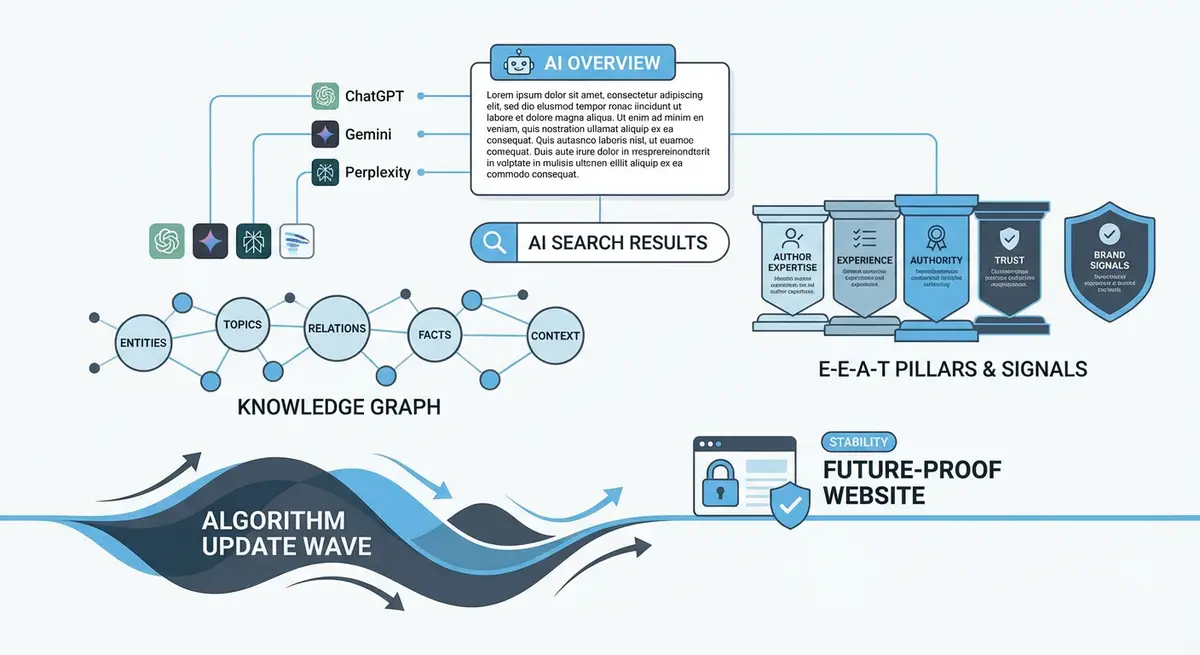
Why Brand Signals Matter More Than Ever
Google can detect and measure branded search volume (how often people search specifically for your business name), direct traffic rates, brand mentions across the web, return visitor rates, and social engagement patterns. These signals tell Google that your brand is real, that real people care about it, and that you have earned trust through means that cannot be manipulated by traditional SEO tactics.
In the AI search era, brand signals matter even more. AI systems like ChatGPT, Perplexity, and Google AI Overviews preferentially cite brands they recognise as trusted entities. When an AI needs to cite a source for a claim about Wix SEO, it will choose a recognised brand with verified expertise over an anonymous affiliate site, regardless of which has more backlinks or keyword density.
The Five Core Brand Signals
These five measurable signals collectively tell Google and AI systems whether your brand is real and trustworthy.
- Branded search volume: The number of people who search specifically for your business name each month. This is the single strongest brand signal because it cannot be faked at scale.
- Direct traffic: Visitors who type your URL directly or have bookmarked your site. High direct traffic tells Google that people know your brand and visit intentionally.
- Brand mentions: References to your brand name across the web, even without links. Google can identify and count brand mentions as a form of unlinked citation.
- Return visitor rate: The percentage of your traffic that comes from returning visitors. A high return rate indicates your brand has earned loyalty.
- Social engagement: Shares, comments, and mentions of your brand on social media platforms, indicating active audience engagement.
Building Branded Search Volume
Branded search volume increases when people know your business exists and think of it by name. Every marketing activity that puts your brand name in front of potential customers contributes to branded search volume. Content marketing, social media presence, word-of-mouth referrals, podcast appearances, event sponsorships, and press coverage all generate brand searches.
When someone googles "Michael Andrews Wix SEO" rather than just "Wix SEO expert", that branded search carries enormous weight. It tells Google that this is a real business with real reputation. Branded searches are also extremely high-converting because they come from people who already know about you and are specifically seeking you out.
Strategies for increasing branded search volume
- Create signature content formats that become associated with your brand: a unique framework, a recurring report, a distinct perspective that people remember and search for by name.
- Build an email newsletter with your brand name prominently featured. Newsletter recipients who later search for your brand represent direct branded search volume.
- Appear on podcasts in your industry. Each appearance introduces your brand to a new audience, many of whom will search your name afterward.
- Speak at local business events and industry conferences. Attendees who want to learn more about you will search your brand name.
- Run targeted social media campaigns that focus on brand awareness rather than direct conversion. Awareness campaigns build the name recognition that generates future branded searches.
- Ask satisfied clients to leave reviews that mention your brand name. Reviews on Google, Trustpilot, and industry platforms create additional branded search prompts.
Offline Brand Building and Online SEO
The strongest brand signals come from activities that exist outside of SEO entirely. Sponsoring local events, speaking at conferences, being quoted in trade press, winning industry awards, building a physical community, all of these offline activities create online signals, mentions, backlinks, branded searches, that strengthen your SEO. The strongest SEO practitioners treat brand building as a full-stack activity that spans both digital and physical presence.
- Sponsor local events and business networking groups. Sponsorship usually includes a backlink from the event website and a mention in event marketing materials.
- Win or submit for industry awards. Even finalist status creates award listing pages, social proof badges for your site, and press mentions that build brand authority.
- Issue press releases about genuinely newsworthy company milestones: awards, major client wins, industry contributions, charitable partnerships.
- Build strategic partnerships with complementary businesses for cross-promotion that expands your brand reach into new audiences.
- Join and actively participate in local chambers of commerce, trade associations, and professional bodies in your industry.
Building an Email List: Your Algorithm-Proof Channel
An email list is the one marketing asset that no algorithm update can take away. Google can change how they rank websites overnight, but they cannot change who is on your email list. Building a substantial email list of engaged subscribers gives you a direct communication channel with your audience that does not depend on any search engine or social media platform.
- Add email signup forms to your Wix blog, homepage, and high-traffic pages.
- Offer a genuine lead magnet: a free tool, template, guide, or resource that provides immediate value.
- Send regular newsletters (weekly or fortnightly) with genuinely useful content, not just promotional messages.
- Segment your list by interest and engagement level to deliver relevant content.
- Use email to drive traffic to new content, which generates engagement signals that benefit SEO.
- When you publish new content, email subscribers drive initial traffic that sends positive engagement signals to Google.
Content That Builds Brand Authority
Not all content builds brand. Commodity content that could appear on any site does not strengthen your brand. Content that reflects your unique perspective, proprietary data, or distinctive expertise builds brand because it can only come from you.
- Original research and data analysis that provides insights no one else can offer.
- Opinionated industry commentary that takes a clear stance rather than hedging.
- Case studies with specific, measurable results from your own client work.
- Behind-the-scenes content that shows your process and methodology.
- Definitive guides that become the go-to reference for a specific topic in your niche.
- Free tools and resources that people bookmark, share, and return to regularly.
Measuring Brand Signal Strength
How to track your brand signal development
- In Google Search Console, filter Performance queries by your brand name. Track monthly impressions and clicks for branded queries. Growth indicates strengthening brand signals.
- In GA4, monitor direct traffic as a percentage of total traffic. Increasing direct traffic indicates growing brand recognition.
- Set up Google Alerts for your brand name. Count monthly mentions and assess their quality and sentiment.
- Track social media mentions using platform-native analytics or tools like Brand24.
- Compare your branded search volume against competitors using Google Trends. Relative branded search strength indicates competitive brand positioning.
- Survey new clients to ask how they found you. Increasing "word of mouth" and "searched your name" responses indicate strong brand signals.
The Compounding Effect of Brand Signals
Brand signals compound over time in a virtuous cycle. More branded searches lead to higher rankings for branded queries. Higher visibility leads to more clicks and engagement. More engagement leads to more brand mentions and social sharing. More mentions and sharing lead to more people discovering your brand and searching for it. This cycle accelerates over time and becomes increasingly difficult for competitors to disrupt.
Critically, this compounding effect also protects you during algorithm updates. When Google reassesses quality signals during a Core update, strong brand signals, high branded search volume, return visitor rates, and cross-platform mentions, provide a quality floor that prevents your site from dropping below a certain ranking threshold even if other signals fluctuate.
Brand Building Tools
- Google Search Console: Track branded search impressions and clicks as your primary brand metric
- Google Trends: Compare your branded search volume against competitors over time
- Brand24: Monitor brand mentions across the web, social media, and news in real time
- Google Alerts: Free email notifications when your brand name is mentioned on the web
- SEO Fix in a Box: My Wix app. Free to install, it scans your site and shows what needs fixing, and paid plans write the fixes from your own Google searches
Complete How-To Guide: Building Brand Signals That Algorithm Updates Cannot Remove
How to build durable brand signals for your Wix business
- Step 1: Measure your current branded search volume. In Google Search Console, filter the Performance report to queries containing your brand name. Record total impressions and clicks. This is your baseline that you will track monthly.
- Step 2: Search your brand name in Google. Evaluate what appears: your website, social profiles, review sites, directory listings. If competitors or irrelevant results appear, you need to strengthen your brand presence.
- Step 3: Ensure you own the first page of Google for your brand name. Optimise your Wix homepage title tag to include your brand name. Fill out social profiles so your LinkedIn, Facebook, Twitter, and directories occupy the remaining positions.
- Step 4: Create genuinely shareable content that earns organic mentions. Original research, free tools, opinionated commentary, and comprehensive guides are the content types most likely to be shared and referenced.
- Step 5: Build an email list from your Wix site. Add signup forms to your blog, homepage, and high-traffic pages. Email subscribers are a direct audience channel that no algorithm update can remove.
- Step 6: Pursue podcast appearances in your industry. Prepare 3-5 key talking points that showcase your expertise. Each podcast creates a backlink, brand mention, and new audience exposure.
- Step 7: Speak at local business events, industry conferences, or webinars. Speaking engagements create event listings, social media mentions, and follow-up branded searches from attendees.
- Step 8: Seek press coverage for genuine business milestones. Use HARO, Qwoted, and ResponseSource to respond to journalist queries. Each media mention is an authoritative brand signal.
- Step 9: Submit for relevant industry awards. Even finalist status creates award listing pages, social proof badges, and press mentions that strengthen brand authority.
- Step 10: Encourage clients to leave reviews on Google, Trustpilot, and industry-specific platforms. A steady stream of positive reviews builds social proof that search engines and AI engines weigh heavily.
- Step 11: Build strategic partnerships with complementary businesses. Cross-promotions, co-authored content, and mutual referrals expand your brand reach into new audiences that generate additional branded searches.
- Step 12: Track branded search volume monthly in Google Search Console. If branded impressions are growing, your brand signals are strengthening. Set a goal to increase branded search volume by 20% each quarter through the activities above.
Was this lesson useful?
It takes 1 minute to tell me. The course is free and I want to keep it that way, and your feedback shows me what is working and helps other people find it.
This lesson on Brand signals that no algorithm update can ever take away is part of Module 26: AI, SGE & Future-Proof SEO in The Most Comprehensive Complete Wix SEO Course in the World (2026 Edition). Created by Michael Andrews, a Wix Marketplace Legend Partner with 14 years of hands-on experience, 800 completed Wix SEO projects and 456 verified five-star reviews.