Setting realistic SEO timelines and expectations
Module 1: SEO Foundations & How Search Works | Lesson 5 of 683 | 45 min read
By Michael Andrews, Wix SEO Expert UK
The number one cause of SEO disappointment is misaligned expectations. Business owners expect page 1 rankings within weeks, abandon strategies that are working because results have not appeared yet, or compare their new Wix site against competitors with years of accumulated authority. Understanding realistic timelines protects you from making costly mistakes: changing strategies prematurely, firing an SEO provider who is actually performing well, or giving up entirely on a channel that would have delivered substantial returns with patience. This lesson gives you evidence-based timelines for every common Wix SEO scenario.
Why SEO Takes Time: The Fundamental Mechanics
SEO is not slow because of incompetence or some inherent flaw. It is slow because of how Google's systems work. Understanding these mechanics helps you set expectations correctly:
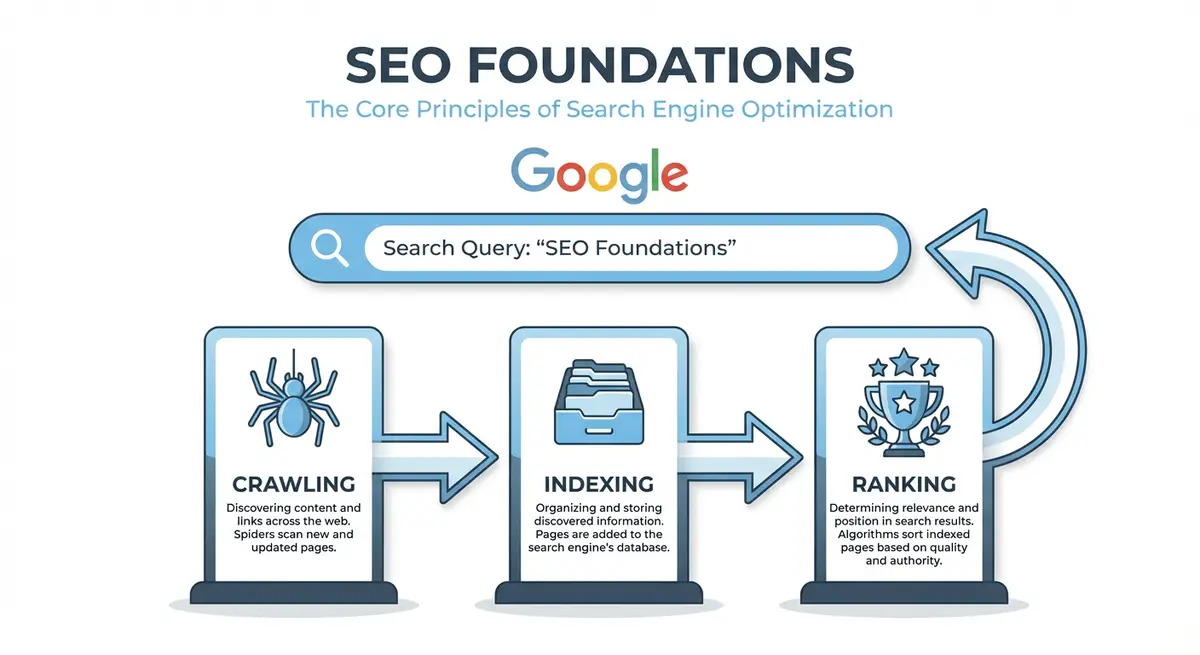
- Crawl and Index Delay: After publishing a new page or making changes, Google must crawl the page, render it, evaluate it, and decide whether to index or re-index it. This process alone takes days to weeks.
- Trust Building: Google does not instantly trust new websites. It observes how a site behaves over time, whether it publishes consistent quality content, earns natural backlinks, and maintains technical health.
- Authority Accumulation: Backlinks, brand mentions, and topical authority accumulate gradually. A single backlink helps, but the compounding effect of many backlinks over months is what drives dramatic ranking improvements.
- Competition Response: When you improve your pages, competitors do not stand still. They also update content, earn links, and optimise. Rankings are relative, not absolute.
- Algorithm Processing: Google runs major ranking system updates periodically (core updates, helpful content updates, spam updates). Your improvements may not be fully processed until the next relevant update rolls out.
The Google Sandbox: Real or Myth?
The "Google Sandbox" refers to the observation that brand new websites seem to be held back from ranking well for their first 3-12 months, regardless of content quality. Google has never officially confirmed a sandbox exists as a specific filter, but the phenomenon is well-documented across thousands of case studies.
What actually happens is more nuanced: new domains have zero authority, zero backlinks, zero user signals, and zero trust signals. Google simply has no reason to rank them above established sites that have all of these signals. As the new site accumulates these signals over months, rankings gradually improve. It looks like a sandbox lifting, but it is really just the natural process of building domain authority from zero.
Realistic SEO Timelines by Scenario
Scenario 1: Brand New Wix Site on a New Domain
This is the slowest scenario because you are starting from zero across every dimension: zero domain authority, zero backlinks, zero content, and zero brand recognition.
- Month 1-2: Technical setup and initial content. Your pages will be crawled and indexed, but you will see near-zero organic traffic. You may rank for your exact brand name and very long-tail, non-competitive queries.
- Month 3-4: First signs of life. Impressions begin appearing in GSC for long-tail keywords. You may see 50-200 impressions per day with very few clicks. Pages start appearing in positions 30-100 for target keywords.
- Month 5-8: Gradual climb. With consistent content publishing and link building, your best-optimised pages start moving into positions 10-30. Organic traffic begins growing week over week. Long-tail keywords start generating clicks.
- Month 9-12: Acceleration phase. The compound effect of content, links, and authority begins. Your best pages break into the top 10 for moderate-competition keywords. Monthly organic traffic reaches meaningful levels.
- Month 12-18: Maturation. With sustained effort, competitive keywords start ranking on page 1. Organic traffic may be 5-20x what it was at month 6. The site is now established enough that new content ranks faster.
Scenario 2: Established Wix Site (1+ Years Old) with Good Technical Health
If your Wix site has been live for over a year, has some existing content, and has no major technical issues, the timeline compresses significantly because you already have domain authority, indexed pages, and potentially some backlinks.
- Week 1-2: Quick wins take effect. After fixing title tags, meta descriptions, and broken links, you may see impressions and CTR improvements within 2 weeks.
- Month 1-2: On-page optimisations reflected. Improved content, heading structure, and internal linking begin producing ranking improvements for existing pages. Pages stuck on page 2-3 may move to page 1.
- Month 2-4: New content gains traction. Blog posts and new pages targeting keyword gaps start ranking for long-tail variations. Internal linking improvements lift existing pages.
- Month 4-6: Sustained growth. With ongoing content and link building, organic traffic grows 30-100% compared to your starting baseline. Multiple pages now compete for page 1 positions.
Scenario 3: Local Business Wix Site (Geographic Keywords)
Local SEO typically produces faster results than national/global SEO because local keywords have lower competition and Google prioritises local businesses for local queries.
- Week 1-4: Google Business Profile optimisation. Claiming, verifying, and fully optimising your GBP can produce Local Pack visibility within 2-4 weeks for uncompetitive local terms.
- Month 1-3: Citation building and on-page local SEO. NAP consistency across directories, location-specific content on your Wix site, and initial review generation begin producing Local Pack and organic local rankings.
- Month 3-6: Local authority building. With 20+ positive reviews, 30+ consistent citations, and locally-optimised Wix content, you should be appearing in the Local Pack for your primary service + location keywords.
- Month 6-12: Expansion. Target additional locations, expand service area pages, and build local links through community involvement, sponsorships, and local press.
Scenario 4: Wix E-commerce Store
- Month 1-3: Technical setup and product page optimisation. Category pages and top product pages begin getting indexed. Long-tail product-specific queries start generating impressions.
- Month 3-6: Content marketing begins producing results. Buying guides, comparison pages, and category descriptions drive informational traffic that converts to product awareness.
- Month 6-12: Product pages start ranking for commercial keywords. With reviews, backlinks, and content authority, product pages compete for transactional queries.
- Month 12+: Brand recognition and repeat traffic. Branded searches increase, returning customers drive organic signals, and the compounding effect of authority produces consistent growth.
Scenario 5: Competitive National/International Keywords
- Month 1-6: Foundation building. No matter how good your content is, ranking for highly competitive national keywords (search volume 10,000+) from a new or small site takes significant time. Focus on building topical authority through comprehensive content coverage.
- Month 6-12: Supporting content drives long-tail traffic while pillar pages climb. You start ranking on page 2-3 for target keywords.
- Month 12-24: With sustained content quality, link building, and authority growth, competitive keywords start reaching page 1. This is where most businesses see the "hockey stick" growth curve.
- Month 24+: Sustained competitive position requires ongoing content updates, link earning, and keeping pace with algorithm updates. SEO at this level is an ongoing investment, not a one-time project.
Leading Indicators: Measuring Progress Before Rankings Move
One of the biggest mistakes in SEO is only tracking keyword rankings and ignoring the leading indicators that show whether your strategy is working. Leading indicators show progress weeks or months before final rankings change.
Google Search Console Metrics to Track Weekly
- Total Impressions: How many times your pages appeared in search results. Growing impressions mean Google is showing your pages for more queries, even if clicks have not increased yet. This is the earliest signal of progress.
- Impression-Weighted Average Position: Your average position across all keywords. A gradual decrease from position 50 to position 30 to position 15 shows clear upward momentum.
- Click-Through Rate (CTR): The percentage of impressions that result in clicks. Improving CTR (even at the same position) indicates your title tags and meta descriptions are becoming more compelling.
- New Keywords Appearing: Check the Queries tab weekly for new keywords your site is appearing for. A growing keyword portfolio is a strong progress signal.
- Pages Indexed: Monitor the Pages report for the total number of indexed pages. Growing indexed pages means Google is finding and valuing your content.
Google Analytics 4 Metrics to Track Monthly
- Organic Sessions: Total visits from organic search. Compare month-over-month and year-over-year for trend analysis.
- Engagement Rate: GA4's replacement for bounce rate. High engagement rate on organic traffic indicates content quality. Improving engagement rate suggests your content is better matching search intent.
- Pages Per Session: How many pages organic visitors view. Increasing pages per session suggests your internal linking and site structure improvements are working.
- Conversions from Organic: The ultimate metric. Track form submissions, phone calls, bookings, or purchases from organic traffic. This ties SEO directly to business outcomes.
Off-Site Metrics to Track Monthly
- Backlink Growth: Track new backlinks earned using Ahrefs, GSC Links report, or Moz. Consistent backlink acquisition is a strong authority-building signal.
- Domain Rating / Domain Authority: While these are third-party metrics (not used by Google), they track the same underlying signals (backlinks) and provide a useful trend indicator.
- Brand Search Volume: Track searches for your brand name in GSC. Growing branded searches indicate growing awareness and authority.
- Citation Count and Consistency: For local businesses, track the number and accuracy of business citations across directories.
Creating Your SEO Milestone Plan
Every Wix site should have a documented SEO plan with specific milestones. This keeps you accountable, helps you track progress, and prevents the "is this working?" anxiety that leads to premature strategy changes.
How to create your month-by-month SEO milestone plan
- Record your baseline metrics today: total organic sessions (GA4 last 30 days), total impressions (GSC last 30 days), number of keywords in top 100 (GSC), number of indexed pages (GSC), current backlink count (Ahrefs free checker or GSC Links report)
- Assess your starting position: Is your domain new (under 6 months) or established? What is your Domain Rating/Authority? How competitive are your target keywords?
- Based on your scenario (from the timelines above), set realistic milestones for Month 1, Month 3, Month 6, and Month 12
- Month 1 milestones should focus on: submit sitemap, fix all crawl errors, optimise title tags and meta descriptions on all pages, compress all images, fix broken links, set up Google Business Profile (if local)
- Month 3 milestones should focus on: publish 6-12 optimised blog posts, implement schema markup, start link building, set up SEO Patterns for Wix Blog, achieve 100% "Good" Core Web Vitals
- Month 6 milestones should focus on: earn 10-20 quality backlinks, expand content to cover your full topical map, achieve top 20 rankings for primary keywords, organic traffic growing 20-50% from baseline
- Month 12 milestones should focus on: achieve page 1 rankings for primary keywords, organic traffic 2-5x baseline, 50+ quality backlinks, strong branded search growth
- Set measurable numeric targets for each milestone (e.g., "20% more indexed pages by Month 3", "500+ monthly organic sessions by Month 6")
- Schedule monthly 30-minute reviews comparing actual metrics against milestone targets
- Document every SEO change you make with the date, so you can correlate changes with ranking movements 2-8 weeks later
- Build a simple dashboard (use a Google Sheet or Looker Studio template) that pulls data from GSC and GA4 for easy monthly tracking
- At each quarterly review, adjust the plan based on actual results: accelerate what is working, pivot from what is not, add new opportunities discovered
Common Timeline Mistakes to Avoid
- Changing strategies after 4-6 weeks because "it is not working". Most SEO changes take 8-16 weeks to show full effect. Changing strategy every month means nothing ever has time to work.
- Comparing your new site to competitors who have been building authority for years. A 2-month-old Wix site should not be benchmarked against a 10-year-old competitor.
- Focusing only on vanity metrics (keyword rankings for a single term) instead of the full picture (total organic traffic, keyword portfolio size, conversions).
- Stopping SEO work once you reach page 1. Rankings are not permanent. Competitors are constantly improving, and Google regularly updates its algorithms. SEO is ongoing maintenance.
- Expecting linear growth. SEO growth is typically exponential: slow at first, then accelerating. The "hockey stick" curve is normal. Months of seemingly slow progress can be followed by rapid growth.
- Not accounting for seasonality. Many businesses have natural traffic fluctuations by season. Compare year-over-year rather than month-over-month to account for this.
How to Create a Month-by-Month SEO Timeline for Your Wix Site
Use this process to build a realistic, personalised SEO timeline based on your specific starting point, competition level, and available resources.
Building a realistic SEO timeline for your Wix site
- Assess your starting point: check Google Search Console for existing impressions, clicks, and indexed pages. A brand-new site with zero history needs a longer timeline than an established site.
- Research your competition: search for your top 3 target keywords and note the Domain Authority of the sites ranking on page 1 using a tool like Moz or Ahrefs free tiers.
- Identify your content gap: count how many quality pages you currently have versus how many the top competitors have. This gap determines how much content work is needed.
- Set your Phase 1 goals (months 1-3): technical foundation complete, 10+ quality pages published, all meta tags and schema implemented, Google Search Console and Analytics configured.
- Set your Phase 2 goals (months 3-6): first keywords appearing in positions 11-30, organic impressions increasing week-on-week, 3-5 quality backlinks acquired.
- Set your Phase 3 goals (months 6-12): target keywords reaching page 1, measurable organic traffic growth month-on-month, compounding content results.
- Identify your key milestones: first GSC impression, first click, first page-2 ranking, first page-1 ranking. Celebrate each as confirmation the strategy is working.
- Define your review cadence: weekly for technical checks, monthly for rankings and traffic review, quarterly for strategy reassessment.
- Document the timeline in writing and share it with any stakeholders to set expectations before results are visible.
- Revisit and adjust the timeline quarterly based on actual results: some markets move faster or slower than average.
How to Communicate SEO Timelines to Clients and Stakeholders
If you are doing SEO for clients or need to justify the investment to business partners, how you communicate timelines is critical. Here are proven frameworks:
- Use the "Foundation, Growth, Scale" framework: Months 1-3 are Foundation (technical setup, content creation, no visible results expected). Months 3-6 are Growth (initial rankings, traffic begins). Months 6-12 are Scale (compounding results, significant traffic).
- Set expectations in the first conversation, before starting work. Explain the crawl-index-rank pipeline and why results take time.
- Provide monthly progress reports with leading indicators, not just rankings. Show impressions growth, new keywords discovered, and pages indexed.
- Use visual graphs in Google Search Console or Looker Studio to show trends over time. An upward trend line is compelling even if absolute numbers are still small.
- Compare against competitor timelines: "Competitor X has been doing SEO for 3 years and has 500 backlinks. We are 3 months in with 15 backlinks. We are making excellent progress relative to our starting point."
- Document ROI projections based on conservative estimates. If organic traffic is growing 10% month-over-month, project forward 12 months to show the compounding value.
SEO is not a sprint, it is compound interest for your business. Every page you publish, every link you earn, and every technical fix you make compounds over time. The businesses that win at SEO are the ones that stay consistent through the early months when results are invisible.
Essential Resources
- Google Search Console Performance Report: Track impressions, clicks, CTR, and average position to measure SEO progress over time
- Google Analytics 4: Monitor organic traffic growth, engagement metrics, and conversions from search
- Looker Studio: Build automated monthly SEO reporting dashboards pulling data from GSC and GA4
- Ahrefs Backlink Checker: Track domain authority and backlink growth as a measure of long-term SEO progress
- SEO Fix in a Box: My Wix app. Free to install, it scans your site and shows what needs fixing, and paid plans write the fixes from your own Google searches
Was this lesson useful?
It takes 1 minute to tell me. The course is free and I want to keep it that way, and your feedback shows me what is working and helps other people find it.
This lesson on Setting realistic SEO timelines and expectations is part of Module 1: SEO Foundations & How Search Works in The Most Comprehensive Complete Wix SEO Course in the World (2026 Edition). Created by Michael Andrews, a Wix Marketplace Legend Partner with 14 years of hands-on experience, 800 completed Wix SEO projects and 456 verified five-star reviews.