Pre-event and post-event content SEO strategy for Wix
Module 60: Wix Events SEO: Rank Your Events in Google | Lesson 635 of 683 | 28 min read
By Michael Andrews, Wix SEO Expert UK
Events have a natural content lifecycle: interest before the event, urgency as the date approaches, and reflection after it happens. Each phase generates different search queries, and each phase gives you an opportunity to create SEO content that serves both the immediate searcher and the long-term ranking goal.
Pre-Event Content That Drives Registrations
- Speaker profiles: "who is [speaker name]" queries from potential attendees researching
- Topic explainer posts: blog content on the event theme attracts learners who discover the event as a next step
- Preview interviews: pre-event Q&A with speakers captures interest and builds anticipation
- Practical prep content: "what to expect at [event name]" answers a common pre-attendance query
- Frequently asked questions page: tickets, location, schedule, accommodation
Post-Event Content That Generates Lasting Traffic
- Event recap post: key highlights, quotes, photos - indexes for "[event name] review" queries
- Session summaries: individual blog posts per session target the specific topic discussed
- Photo gallery: optimised images with event-specific alt text capture Google Images traffic
- Video recordings: session recordings with transcripts provide long-term SEO value
- Takeaways and resources: a "what we learned" post captures informational queries long after the event
How to build a pre-event and post-event content plan on Wix
- Open your Wix Dashboard and navigate to Blog to access the blog post editor.
- At least four weeks before the event, publish a speaker profile or event preview post - optimise the title for "who is [speaker name]" or "[event topic] workshop [city]" queries.
- Create an event FAQ page in Wix Pages covering tickets, location, schedule, and travel - link to it from the event page.
- One week before the event, publish a "what to expect" post and link from it to the event registration page with a clear CTA.
- On the day of or immediately after the event, publish a photo gallery post with event-specific keyword-optimised alt text on every image.
- Within three days of the event, publish a comprehensive event recap post covering key moments, quotes, and takeaways.
- For each session or talk, publish a dedicated summary post targeting the specific topic - link from each session post back to the main event page.
- Embed any video recordings in a post with a full written transcript below the video - this provides long-form indexable content for session queries.
- After the event, update the original Wix event page to include a link to the recap, photo gallery, and recordings to create a comprehensive event resource.
- Three months after the event, review Google Search Console for which post-event queries are still generating impressions and expand those pages with additional content.
How to Create Pre-Event and Post-Event Content That Ranks on Wix
Execute this content plan to build a full SEO lifecycle around each event, generating organic traffic before, during, and long after the event itself.
Building and publishing pre-event and post-event SEO content on Wix
- Go to Wix Dashboard and open Blog to create a new blog post at least four weeks before the event - write a speaker profile or event topic explainer targeting an informational query related to the event theme.
- In the blog post editor, add an internal link to the event registration page with CTA anchor text such as "register for the event" or "book your place".
- Two weeks before the event, publish a second pre-event blog post answering a "what to expect" or "who should attend" query and link it to the event page.
- Create an event FAQ page using Wix Pages - cover tickets, venue, travel, schedule, and any dietary or accessibility information - and link to it from the event page and the blog posts.
- On the day of the event, set up a draft post in the Wix Blog editor for the event recap, pre-loading the title, intro, and image placeholders so you can publish it quickly after the event.
- Within 24 hours of the event ending, publish the recap post with photos, key quotes, and headline takeaways - use the event name plus "review" or "recap" in the title and URL slug.
- Within three days, publish a detailed "key takeaways" or "what we learned" post covering the main lessons or announcements from the event.
- For each speaker or session, create an individual summary blog post targeting the specific topic discussed - link each post back to the main event page and to the recap post.
- Embed any video recordings in dedicated Wix blog posts and add a full written transcript below each video to provide long-form indexable content for session-specific queries.
- After the event, update the original Wix event page to include links to all post-event content (recap, session summaries, gallery) so the event page becomes a permanent content hub.
- Three months after the event, review Google Search Console Performance for all event-related posts - identify which continue to generate impressions and expand those pages with additional depth.
Essential Tools for This Lesson
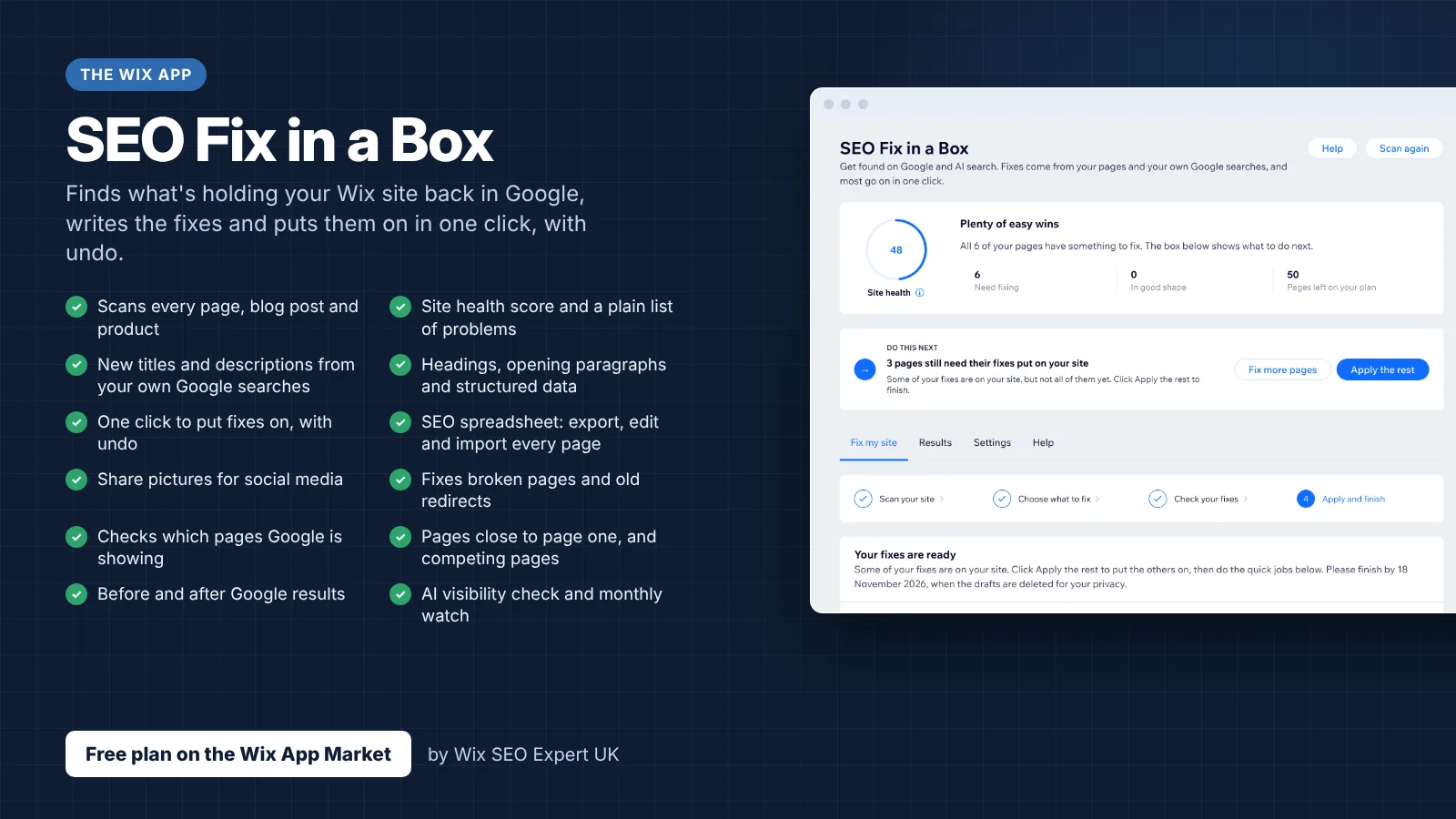
- SEO Fix in a Box: My Wix app. Free to install, it scans your site and shows what needs fixing, and paid plans write the fixes from your own Google searches
Was this lesson useful?
It takes 1 minute to tell me. The course is free and I want to keep it that way, and your feedback shows me what is working and helps other people find it.
This lesson on Pre-event and post-event content SEO strategy for Wix is part of Module 60: Wix Events SEO: Rank Your Events in Google in The Most Comprehensive Complete Wix SEO Course in the World (2026 Edition). Created by Michael Andrews, a Wix Marketplace Legend Partner with 14 years of hands-on experience, 800 completed Wix SEO projects and 456 verified five-star reviews.