Non-English keyword research: tools, techniques and cultural adaptation for Wix
Module 35: Wix SEO for Non-English Markets & Alternative Search Engines | Lesson 410 of 683 | 50 min read
By Michael Andrews, Wix SEO Expert UK
Keyword research in non-English markets is fundamentally different from English keyword research. Direct translation of English keywords almost never produces the best target keywords because different cultures search differently. German users tend to use compound words. Japanese users mix kanji, hiragana, and katakana in searches. French users search with different syntax than Canadian French speakers. This lesson covers the tools, techniques, and cultural understanding needed for effective non-English keyword research.

Why Direct Translation Kills Keyword Strategy
Consider the English keyword "cheap flights to Paris". A direct Spanish translation would be "vuelos baratos a Paris". But Spanish speakers actually search "vuelos economicos Paris" or "ofertas vuelos Paris". The translated version might have volume, but it misses the natural search patterns of native speakers. This happens in every language: the keyword a native speaker uses is often structurally and semantically different from a direct translation.
Keyword Research Tools by Language
- Google Keyword Planner: works for most languages when you set the target country and language
- Yandex Wordstat (wordstat.yandex.ru): essential for Russian keyword research with exact Yandex search volumes
- Naver Keyword Planner: essential for Korean keyword research via Naver Ads
- Baidu Index (index.baidu.com): Chinese keyword trends and volume data
- Google Trends: available for most languages and regions for trend analysis
- Ubersuggest: supports multiple languages for keyword suggestions
- AnswerThePublic: available in several languages for question-based keyword research
Cultural Search Behaviour Differences
German Searches
German uses compound words extensively. "Suchmaschinenoptimierung" (search engine optimisation) is one word. German searchers often use these long compound terms that would be multi-word phrases in English. Keyword research must account for compound word variations.
Japanese Searches
Japanese uses three writing systems (kanji, hiragana, katakana) plus romaji (Latin letters). A single concept might be searched in multiple scripts. Foreign brand names are typically in katakana. Technical terms might mix scripts. Comprehensive Japanese keyword research must cover all script variations.
Arabic Searches
Arabic is a right-to-left language with regional dialects that differ significantly. Egyptian Arabic, Gulf Arabic, and Modern Standard Arabic produce different search queries. A keyword that works in Egypt may have zero volume in Saudi Arabia for the same concept because different dialects use different words.
Building Bilingual Keyword Maps
Research non-English keywords properly
- Start with your English keywords as seed concepts (not direct translations)
- For each concept, ask a native speaker how they would search for this topic in their language
- Use the appropriate keyword tool for your target language and engine
- Research autocomplete suggestions in the target language on the target search engine
- Compare search volumes for multiple native variations of each concept
- Check People Also Ask or equivalent features in the target language for related queries
- Create a bilingual keyword map: English concept, native keyword, search volume, difficulty
- Validate your final keyword list with a native speaker to ensure cultural accuracy
Using Autocomplete for Native Keyword Discovery
Autocomplete suggestions on each target search engine are the most authentic source of real user queries. Google Autocomplete in French shows what French users actually type. Yandex Autocomplete shows what Russian users search. These suggestions reflect real search behaviour and often reveal keyword patterns that formal keyword tools miss. Use incognito mode and set your browser language and location to the target market for the most accurate autocomplete suggestions.
Use autocomplete to discover native-language keywords
- Open an incognito browser window. Change your browser language to the target language in settings.
- Navigate to the dominant search engine for your target market (Google for most, Yandex for Russia, Naver for Korea).
- If possible, use a VPN set to the target country for the most location-accurate suggestions.
- Type the beginning of your seed keyword concept in the target language. Note every autocomplete suggestion.
- Add different prefixes and suffixes: "how to...", "best...", "why...", "where..." in the target language.
- Use the alphabet soup technique: type your keyword followed by each letter of the alphabet (a, b, c...) and record the autocomplete suggestions for each.
- Compile all unique suggestions into a spreadsheet. Have a native speaker review and categorise them by search intent.
Competitor Keyword Analysis in Non-English Markets
Analysing competitors who already rank in your target language provides the fastest path to a keyword list. Find 3-5 competitors who rank well on the target search engine for your business type. Use tools like Ahrefs or Semrush (which support multiple languages) to extract their ranking keywords. These competitors have already done the keyword research for you; your job is to identify which of their keywords are relevant to your business and create better content targeting those terms.
- Search your primary service in the target language on the target search engine. Note the top 5 ranking sites.
- Enter each competitor domain into Ahrefs Site Explorer or Semrush Domain Overview with the target country selected.
- Export their top organic keywords. Filter by search volume above 100 and keyword difficulty below 50.
- Have a native speaker review the keyword list and flag any terms that are irrelevant or culturally inappropriate.
- Create a master keyword list combining competitor keywords with your autocomplete research.
- Prioritise keywords where multiple competitors rank but none have comprehensive, high-quality content.
Complete How-To Guide: Non-English Keyword Research for Your Wix Site
Complete step-by-step non-English keyword research process
- Step 1: Define your target language and market. Be specific: "French-speaking consumers in France" is different from "French-speaking consumers in Canada (Quebec)".
- Step 2: Find a native speaker from your target market. This person will validate keywords, check cultural accuracy, and provide search behaviour insights. A freelance translator or marketing consultant works well.
- Step 3: List your top 20 English keywords by business importance. These are your seed concepts, not direct translations.
- Step 4: Ask your native speaker how they would search for each concept. Record their exact phrasing. This produces naturally worded target keywords.
- Step 5: Use the appropriate keyword tool for your target language: Google Keyword Planner for most languages, Yandex Wordstat for Russian, Naver Keyword Planner for Korean.
- Step 6: Run autocomplete research on the target search engine using the native-language seeds. Use the alphabet soup technique and compile all suggestions.
- Step 7: Analyse 3-5 competitors ranking in your target language. Extract their top keywords using Ahrefs or Semrush.
- Step 8: Combine all keyword sources (native speaker input, keyword tools, autocomplete, competitor analysis) into a master spreadsheet.
- Step 9: For each keyword, record: native keyword, English equivalent concept, monthly search volume, keyword difficulty, and search intent (informational, commercial, transactional).
- Step 10: Have your native speaker review the final list. Remove any keywords that are culturally inappropriate, dialect-specific to the wrong region, or do not match your business.
- Step 11: Prioritise keywords by a combination of business relevance, search volume, and competition level. Assign each keyword to a specific page on your Wix site.
- Step 12: Create your bilingual keyword map: a document showing each target keyword, its English equivalent, the assigned Wix page, and any cultural notes about how to use it in content.
For Arabic, Hebrew and Farsi markets, Arabic SEO on Wix covers dialects, right to left text and indexing.
Essential Tools for This Lesson
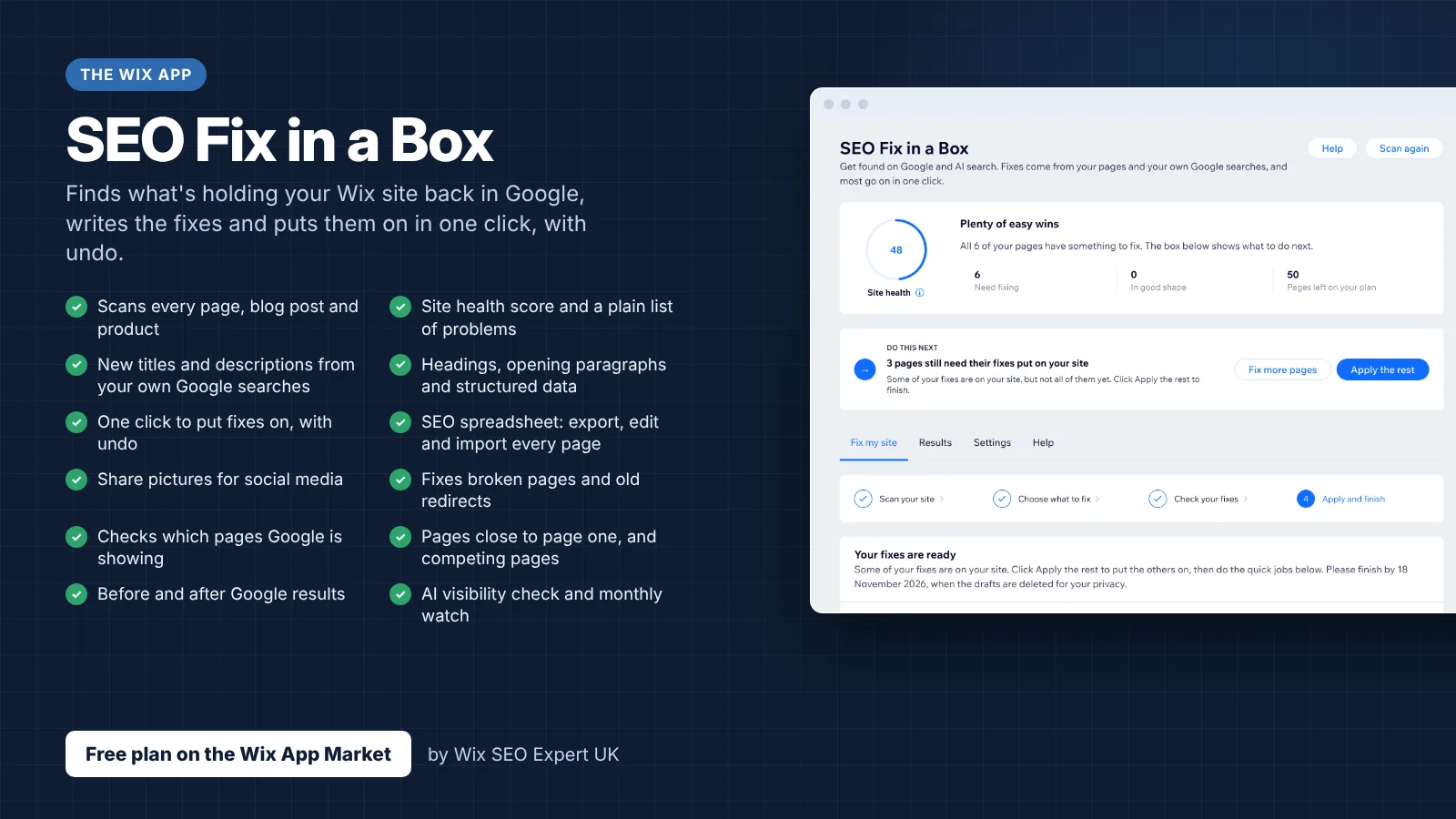
- SEO Fix in a Box: My Wix app. Free to install, it scans your site and shows what needs fixing, and paid plans write the fixes from your own Google searches
Was this lesson useful?
It takes 1 minute to tell me. The course is free and I want to keep it that way, and your feedback shows me what is working and helps other people find it.
This lesson on Non-English keyword research: tools, techniques and cultural adaptation for Wix is part of Module 35: Wix SEO for Non-English Markets & Alternative Search Engines in The Most Comprehensive Complete Wix SEO Course in the World (2026 Edition). Created by Michael Andrews, a Wix Marketplace Legend Partner with 14 years of hands-on experience, 800 completed Wix SEO projects and 456 verified five-star reviews.