Enterprise international SEO and multi-market strategy on Wix
Module 42: Enterprise SEO Strategy on Wix | Lesson 481 of 683 | 38 min read
By Michael Andrews, Wix SEO Expert UK
Enterprises operating across multiple countries and languages face SEO complexity that multiplies with each market. Hreflang implementation, content localisation, market-specific keyword strategies and managing multiple Google Search Console properties all require systematic approaches. This lesson covers the enterprise-level international SEO strategies for Wix sites targeting multiple markets, from technical implementation to content localisation to performance measurement.
International SEO Architecture Decisions
The foundational decision for enterprise international SEO is your domain strategy. Each option has trade-offs that affect authority building, management complexity and local search performance.
- Country-code TLDs (example.co.uk, example.de): strongest geo-targeting signal but requires building authority for each domain independently. Best for enterprises with strong local brand presence.
- Subdirectories (example.com/uk/, example.com/de/): consolidates authority under a single domain. Best for enterprises building global authority from a single brand.
- Subdomains (uk.example.com, de.example.com): middle ground but treated as separate sites by Google. Generally the least recommended option.
- On Wix, subdirectories are the most practical approach. Wix Multilingual app supports language/region variants under a single domain with automatic hreflang implementation.
Hreflang Implementation at Enterprise Scale
Hreflang tags tell Google which language and regional variant to serve to users in different markets. At enterprise scale with dozens of page variants across multiple markets, manual hreflang management is impossible. Wix Multilingual handles hreflang automatically for translated content, but you must verify implementation is correct across all page types and handle edge cases like pages that exist in some languages but not others.
Content Localisation vs Translation
Translation converts words from one language to another. Localisation adapts the entire content experience for a specific market, including cultural references, local examples, market-specific data, local pricing, local regulations and local competitor mentions. Enterprise SEO requires localisation, not just translation. A page about SEO best practices for the UK market should reference UK-specific tools, UK Google algorithms, UK competitor data and UK pricing, not simply translate a US-focused page into British English.
Enterprise content localisation process
- Start with keyword research for each target market. The same concept may have different search terms in different countries even when the language is the same.
- Create market-specific content briefs that include local keyword targets, local competitor analysis and market-specific examples.
- Use native speakers for content creation, not just translation. They understand local context, cultural nuances and market-specific terminology.
- Localise all supporting elements: images, testimonials, case studies, pricing, contact details and calls to action.
- Implement local structured data: correct currency in Product schema, local business addresses in LocalBusiness schema and region-specific FAQ content.
- Monitor search performance separately for each market using individual Search Console properties or URL prefix segments.
Complete How-To Guide: Enterprise International SEO on Wix
Set up multi-market SEO on Wix
- Step 1: Define your target markets with prioritisation. List each country/language combination, estimated search opportunity, current competitive position and required investment. Prioritise markets by ROI potential.
- Step 2: Choose your domain strategy (ccTLDs vs subdirectories). For most Wix enterprises, subdirectories with Wix Multilingual are the most practical approach.
- Step 3: Set up Wix Multilingual for your target languages. Configure language switcher, default language and URL structure (e.g., /en/, /de/, /fr/).
- Step 4: Conduct keyword research for each target market separately. Use local versions of Google (google.co.uk, google.de, etc.) and local keyword tools to find market-specific search terms.
- Step 5: Create localised content for each market. Do not simply translate: localise with market-specific keywords, examples, data, pricing and cultural references.
- Step 6: Verify hreflang implementation using Ahrefs Site Audit or Screaming Frog. Check that every page has correct bidirectional hreflang tags and that no orphaned references exist.
- Step 7: Set up Google Search Console properties for each country or language variant. Use URL prefix properties if using subdirectories to filter data by market.
- Step 8: Build market-specific performance dashboards tracking organic traffic, keyword rankings and conversions for each target market separately. Compare performance across markets to identify underperforming regions needing additional investment.
Essential Resources
- Google Search Console: Set up per-country properties and monitor hreflang implementation
- Ahrefs: International keyword research and competitor analysis by market
- Hreflang Tags Generator: Generate correct hreflang tags for multi-market Wix sites
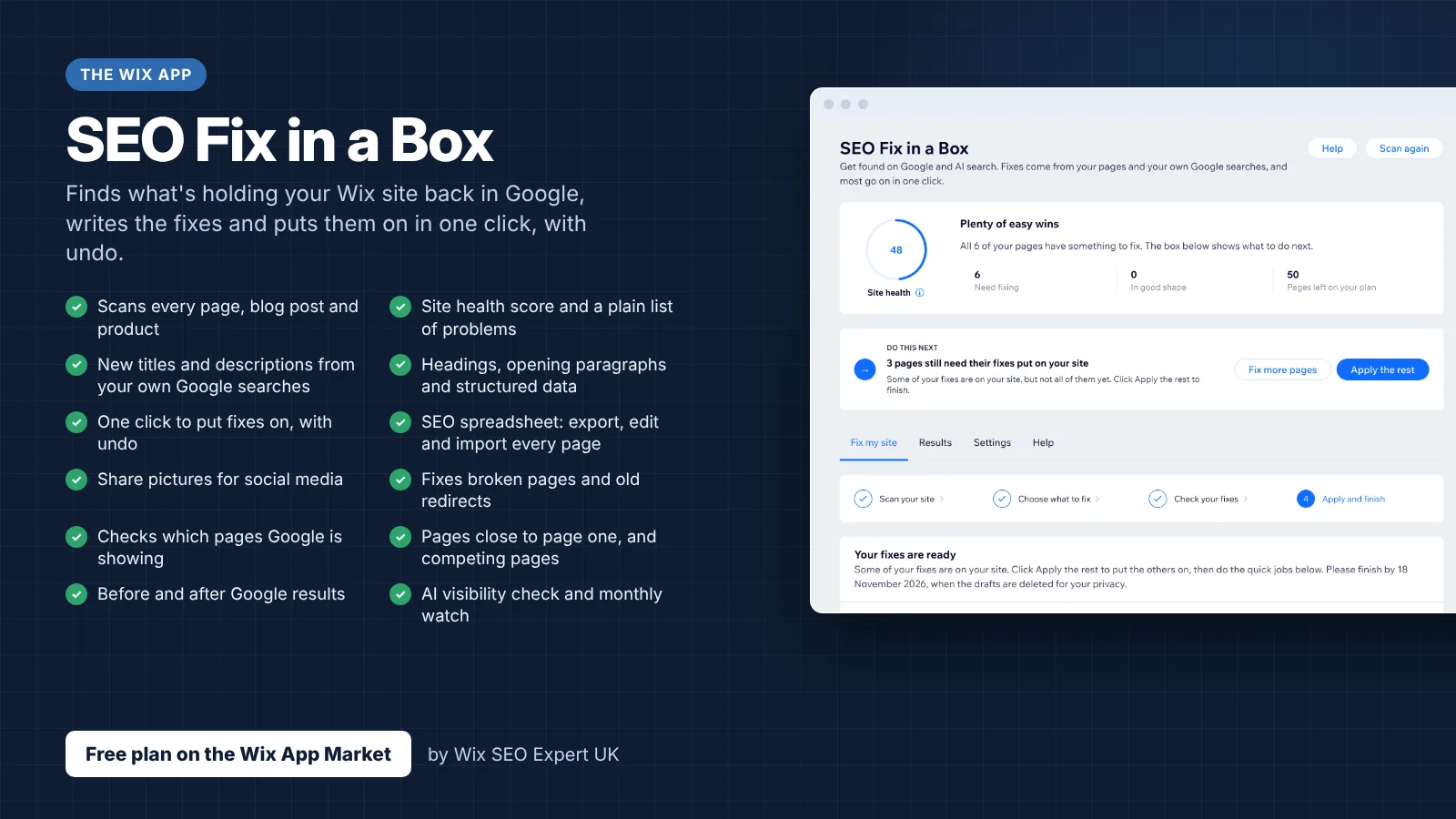
- SEO Fix in a Box: My Wix app. Free to install, it scans your site and shows what needs fixing, and paid plans write the fixes from your own Google searches
Was this lesson useful?
It takes 1 minute to tell me. The course is free and I want to keep it that way, and your feedback shows me what is working and helps other people find it.
This lesson on Enterprise international SEO and multi-market strategy on Wix is part of Module 42: Enterprise SEO Strategy on Wix in The Most Comprehensive Complete Wix SEO Course in the World (2026 Edition). Created by Michael Andrews, a Wix Marketplace Legend Partner with 14 years of hands-on experience, 800 completed Wix SEO projects and 456 verified five-star reviews.