Category and collection page SEO that outranks Amazon and eBay
Module 17: Wix eCommerce SEO Mastery | Lesson 197 of 683 | 28 min read
By Michael Andrews, Wix SEO Expert UK
Category pages are the unsung heroes of eCommerce SEO. While most store owners obsess over individual product pages, it is category pages that rank for the highest-volume, most valuable commercial keywords. Search terms like "running shoes", "organic essential oils", or "wireless headphones" are dominated by category and collection pages, not individual product listings. If you optimise your Wix Store collection pages correctly, you can compete with and even outrank marketplace giants like Amazon and eBay for these lucrative terms.
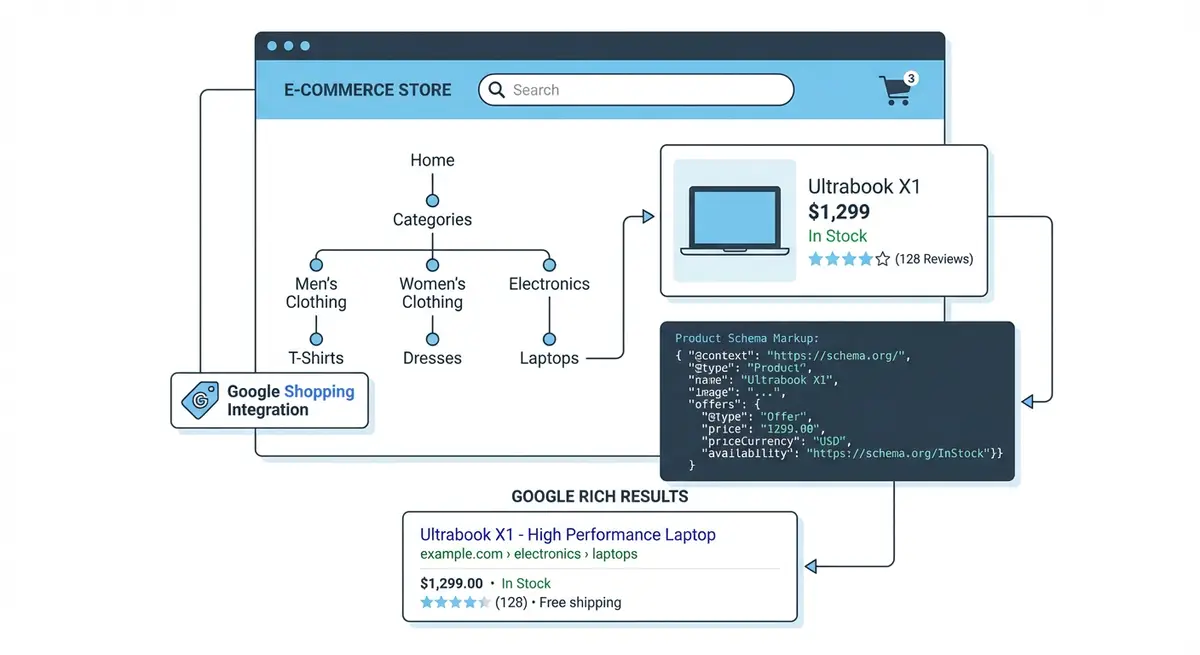
Why Category Pages Outrank Product Pages for High-Volume Keywords
When someone searches "wireless headphones", Google knows they are in the research and comparison phase, not ready to buy one specific product. The search intent is to browse options. This is why Google consistently ranks category pages, product listing pages, and comparison pages for these broad commercial queries. A category page satisfies this intent perfectly by presenting multiple options with filters, while a single product page only satisfies someone who already knows exactly what they want.
Category pages also naturally accumulate more internal links than individual product pages. Every product in the category links back to the collection. Your navigation menu links to the category. Blog posts reference the category. This concentration of internal link equity gives category pages significantly more authority than any single product page, which is another reason they tend to rank higher for competitive terms.
Adding Unique Content to Wix Collection Pages
The biggest mistake eCommerce store owners make with category pages is leaving them as nothing more than a grid of product thumbnails. A category page with no unique text content is thin content in Google's eyes. It provides no context about what the category is, who the products are for, or how they differ. Without text content, Google has little to index and no signals to determine relevance for target keywords.
Wix Stores allows you to add a description to every collection page. Use this field to write 200-400 words of unique, keyword-optimised content that introduces the category, explains the types of products included, and guides shoppers toward making a decision. Place the most important paragraph with your primary keyword at the top of the page above the product grid, and consider adding a longer content section below the product grid for additional keyword coverage.
How to add SEO content to Wix collection pages
- In your Wix Dashboard, go to Store Products > Collections
- Click on a collection to edit it
- Add a collection description in the text field (this appears above the product grid)
- Write 200-400 words introducing the category, including your primary keyword in the first sentence
- Use the Wix Editor to add a text section below the product grid for additional content (FAQs, buying guides, etc.)
- Add internal links within the collection description pointing to related categories and featured products
- Set a custom SEO title and meta description for each collection page using the SEO settings
- Include your primary keyword in the collection page URL slug
CollectionPage Schema Markup
While Wix handles basic page schema automatically, adding explicit CollectionPage schema with an ItemList of your products helps Google understand the structure of your category pages. This schema can improve how Google displays your category pages in search results, potentially showing product thumbnails or additional information. It also reinforces the parent-child relationship between your category and its products in Google's knowledge graph.
{
  "@context": "https://schema.org",
  "@type": "CollectionPage",
  "name": "Organic Essential Oils",
  "description": "Browse our complete collection of certified organic essential oils, including lavender, peppermint, eucalyptus, and tea tree. All oils are pure, steam-distilled, and therapeutic grade.",
  "url": "https://www.yourstore.com/organic-essential-oils",
  "mainEntity": {
    "@type": "ItemList",
    "itemListElement": [
      {
        "@type": "ListItem",
        "position": 1,
        "url": "https://www.yourstore.com/product-page/organic-lavender-essential-oil"
      },
      {
        "@type": "ListItem",
        "position": 2,
        "url": "https://www.yourstore.com/product-page/organic-peppermint-essential-oil"
      },
      {
        "@type": "ListItem",
        "position": 3,
        "url": "https://www.yourstore.com/product-page/organic-eucalyptus-essential-oil"
      },
      {
        "@type": "ListItem",
        "position": 4,
        "url": "https://www.yourstore.com/product-page/organic-tea-tree-essential-oil"
      }
    ]
  }
}
Avoiding Thin Content on Collection Pages
Thin content is the number one reason category pages fail to rank. A page with nothing but product images and prices gives Google almost nothing to work with. But the solution is not to stuff 2,000 words of filler content onto every category page. The content must be genuinely useful: it should help shoppers understand the category, compare products, and make informed decisions. Every word on the page should serve the user, not just the search engine.
- Add a unique description of at least 200 words to every collection page
- Include an FAQ section below the product grid answering 3-5 common questions about the product category
- Add a "Buying Guide" section that explains key features, price ranges, and what to consider before purchasing
- Feature customer testimonials or aggregate review data specific to the category
- Use internal links within the content to connect to related categories, subcategories, and pillar blog content
- Update category content quarterly with new information, seasonal recommendations, and trending products
- Never duplicate the same description across multiple collection pages; each must be unique
Beating Amazon and eBay on Category Keywords
You cannot outlink Amazon. But you can outspecialise them. Amazon ranks for "essential oils" because of its sheer domain authority and product volume. But for long-tail category terms like "organic essential oils for anxiety", "therapeutic grade lavender oil collection", or "essential oils starter kit for beginners", a specialist Wix Store with focused category content, genuine expertise, and comprehensive buying guides can absolutely outrank Amazon. The key is to target specific subcategory and modifier-enriched category terms where your specialist authority outweighs their raw domain strength.
Your competitive advantages over marketplaces include: authentic brand voice and storytelling, curated rather than exhaustive product selection, expert buying guides written from first-hand experience, customer community and trust, and the ability to create deep topical clusters around your niche. A collection page on a specialist store surrounded by 20 supporting blog posts, detailed product descriptions, and genuine customer reviews sends far stronger topical authority signals than Amazon's generic category page.
Category Page SEO Tools
- Ahrefs Keywords Explorer: Research category-level keywords and identify long-tail opportunities where you can outrank marketplaces
- Google Rich Results Test: Validate your CollectionPage schema markup and check for errors
- Surfer SEO: Analyse top-ranking category pages to determine optimal word count, heading structure, and keyword density
- Google Search Console: Monitor which category page queries are generating impressions and clicks
- SEO Fix in a Box: My Wix app. Free to install, it scans your site and shows what needs fixing, and paid plans write the fixes from your own Google searches
Complete How-To Guide: Optimising Wix Collection Pages to Outrank Marketplaces
This guide walks you through transforming your Wix Store collection pages from basic product grids into SEO-optimised category pages that compete with Amazon and eBay.
How to optimise Wix collection pages for maximum search visibility
- Step 1: Identify your highest-value collection pages. Check Google Search Console for collection page URLs that already receive impressions. These are your best candidates for optimisation because Google is already considering them.
- Step 2: Research the primary keyword for each collection page. Use Semrush or Ahrefs to find the highest-volume term that describes the product category (e.g., "organic essential oils" not "our oil collection").
- Step 3: Set a keyword-optimised title tag for each collection page. Go to the Wix Editor, open the collection page, access SEO settings, and write a title following the format: [Category Keyword] - [Benefit or Differentiator] | [Brand].
- Step 4: Write a unique meta description for each collection page that includes the primary keyword, the number of products available, and a compelling reason to browse your collection over a marketplace.
- Step 5: Add 200-400 words of unique descriptive content to the top of each collection page. Explain what the category includes, who it is for, and why your products are the best choice. This content differentiates you from marketplaces that rely on product grids alone.
- Step 6: Structure the descriptive content with an H1 tag containing your primary keyword and H2 subheadings for key topics like product types, usage guides, or buying advice.
- Step 7: Add FAQ content at the bottom of collection pages addressing common buyer questions. "What is the best essential oil for beginners?" or "How do I choose the right size?" This targets long-tail keywords and can earn featured snippets.
- Step 8: Add CollectionPage schema markup if Wix does not generate it automatically. Use the Rich Results Test to check. CollectionPage schema helps Google understand the page is a category listing.
- Step 9: Internal link from blog posts to collection pages using keyword-rich anchor text. If you have a blog post about "benefits of lavender", link to your lavender essential oils collection.
- Step 10: Ensure collection pages link to each other where relevant. Cross-link between related categories like "Essential Oils" and "Diffusers" or "Candles" and "Gift Sets".
- Step 11: Optimise the product grid display. Ensure product images, names and prices are visible above the fold. A collection page where users must scroll before seeing any products has higher bounce rates.
- Step 12: Monitor collection page performance monthly in Search Console. Track impressions, clicks and average position for category keywords. Compare your rankings against Amazon and eBay listings for the same terms.
Was this lesson useful?
It takes 1 minute to tell me. The course is free and I want to keep it that way, and your feedback shows me what is working and helps other people find it.
This lesson on Category and collection page SEO that outranks Amazon and eBay is part of Module 17: Wix eCommerce SEO Mastery in The Most Comprehensive Complete Wix SEO Course in the World (2026 Edition). Created by Michael Andrews, a Wix Marketplace Legend Partner with 14 years of hands-on experience, 800 completed Wix SEO projects and 456 verified five-star reviews.