Author pages and expertise signals that build E-E-A-T
Module 26: AI, SGE & Future-Proof SEO | Lesson 313 of 683 | 22 min read
By Michael Andrews, Wix SEO Expert UK
Your author page and individual expertise signals are increasingly important as Google and AI search engines evaluate whether to cite your content. Google Quality Raters are explicitly trained to search for author names and evaluate their credentials when assessing content quality. A well-built author profile on your Wix site, combined with off-site credentials, is one of the most powerful E-E-A-T investments you can make. This lesson covers building an authoritative author presence that both Google and AI engines trust.
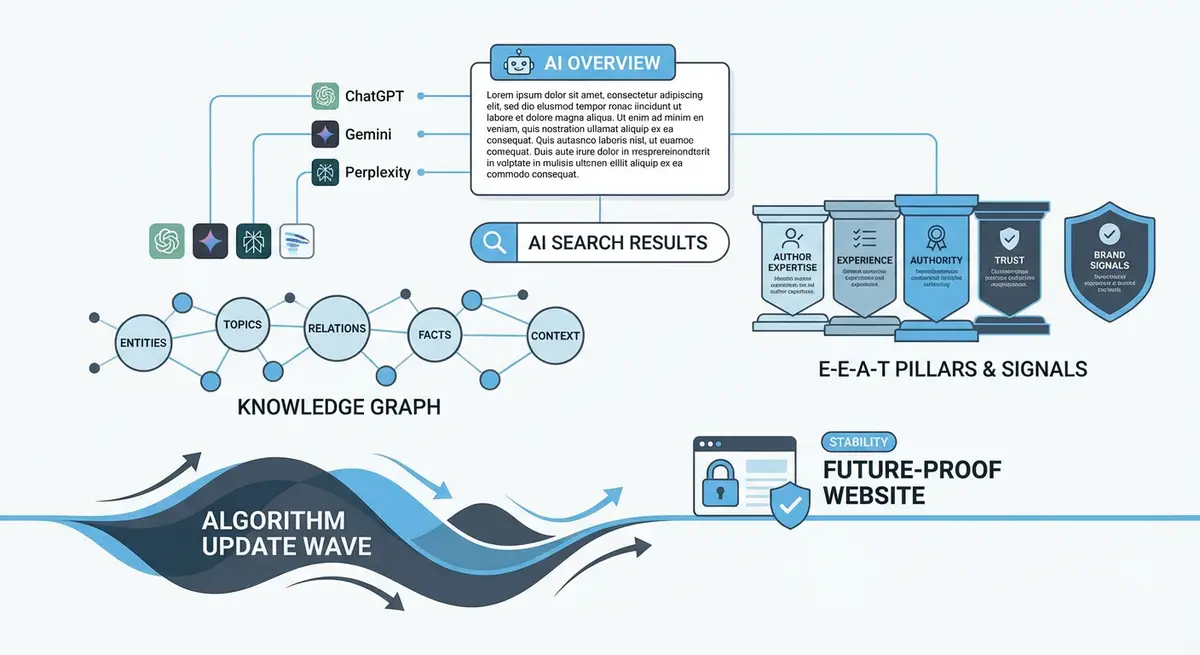
Why Author Authority Matters More Than Ever
Google's Quality Rater Guidelines dedicate significant sections to evaluating content creators. Raters are instructed to search for the author's name, check their credentials, look for third-party validation of their expertise, and assess whether they have genuine experience with the topic. This manual evaluation process informs the algorithm updates that affect rankings for millions of sites.
AI search engines amplify this further. When Perplexity, ChatGPT Search, or Google AI Overviews decide which source to cite, they evaluate the credibility of the content creator. Content from an author with verifiable expertise, published credentials, and a consistent professional presence across the web is significantly more likely to be cited than anonymous or unattributed content.
What an Authoritative Author Page Includes
Your author page is the canonical source of truth about your professional identity. It should provide enough detail that a Google Quality Rater, an AI system, or a potential client can quickly verify your expertise and trustworthiness.
- Full name and professional headshot: The same photo should appear across all your professional platforms for entity consistency.
- Current job title and organisation: Clear statement of your role and the business you represent.
- Years of experience in the field: Specific number of years with a brief summary of your career trajectory.
- Specific credentials and certifications: Exact certification names, issuing bodies, and dates. "Google Analytics 4 Certified (2025)" not just "certified in analytics".
- Education and training: Relevant degrees, professional qualifications, and specialised training programmes.
- Publications and media mentions: Links to guest articles, press quotes, podcast appearances, and speaking engagements.
- Case studies or results achieved: Specific, measurable outcomes from your work that demonstrate practical expertise.
- Professional profile links: LinkedIn, Twitter/X, industry forums, and any platforms where you are professionally active.
- Contact information or booking link: Direct way to reach you, reinforcing that you are a real, accessible person.
- Article archive: A list of all content you have authored on the site, demonstrating breadth and depth of expertise.
Building Your Author Page on Wix
Creating an authoritative author page on your Wix site
- Create a dedicated page at /about/[your-name] or /author/[your-name]. This is the canonical URL for your personal entity.
- Add a professional headshot at the top. Use a high-quality, current photo with a clean background that matches your LinkedIn and other platform photos.
- Write a detailed biography of 300-500 words. Cover your full name, job title, years of experience, specific areas of expertise, credentials, education, publications, speaking engagements, and notable achievements.
- List credentials with full specifics: "Semrush SEO Toolkit Certification (2024), Google Analytics 4 Certified (2025), Wix SEO Certified Partner" rather than vague claims like "certified SEO expert".
- Add a "Featured In" or "Media" section linking to guest articles, press mentions, podcast appearances, and conference presentations. Each external link validates your expertise.
- Include a "Results" or "Case Studies" section with specific outcomes: "Increased organic traffic by 312% for a Wix e-commerce client in 8 months" backed by data you can verify.
- Create an "Articles by [Your Name]" section listing every piece of content you have authored on the site.
- Add links to all professional profiles: LinkedIn, Twitter/X, industry forums, and other platforms where you are active.
Person Schema for Author Pages
Person schema on your author page creates a machine-readable definition of your professional identity that search engines and AI systems can process. This structured data connects your author page to your content, your credentials, and your external profiles in a format that algorithms can directly evaluate.
{
  "@context": "https://schema.org",
  "@type": "Person",
  "name": "Your Full Name",
  "jobTitle": "SEO Director & Wix Expert",
  "url": "https://yoursite.com/about/your-name",
  "image": "https://yoursite.com/author-photo.jpg",
  "description": "SEO specialist with 8 years of experience...",
  "knowsAbout": [
    "Wix SEO",
    "Technical SEO",
    "Local SEO",
    "Content Strategy"
  ],
  "hasCredential": [
    {
      "@type": "EducationalOccupationalCredential",
      "name": "Google Analytics 4 Certification",
      "credentialCategory": "Professional Certification"
    }
  ],
  "alumniOf": {
    "@type": "CollegeOrUniversity",
    "name": "University Name"
  },
  "worksFor": {
    "@type": "Organization",
    "name": "Your Business Name",
    "url": "https://yoursite.com"
  },
  "sameAs": [
    "https://www.linkedin.com/in/yourprofile",
    "https://twitter.com/yourhandle"
  ]
}
Connecting Author to Content
Every piece of content on your Wix site should be explicitly connected to its author. This connection needs to exist in three places: visually on the page (author byline with photo and link), in the HTML structure (linking to the author page), and in the structured data (Article schema with author property referencing the Person entity).
- Add an author byline section to every blog post with your name, photo, a one-line bio, and a link to your full author page.
- In the Article schema on every blog post, include an "author" property that references your Person entity by URL.
- Link from the author page to every major piece of content you have created, creating a bidirectional connection.
- Use consistent formatting across all bylines so Google recognises the same author entity across all content.
Building Off-Site Expertise Signals
Google Quality Raters are trained to search for author names outside the author site. What they find in those off-site searches determines much of the E-E-A-T evaluation. An author whose name returns guest articles on respected publications, press quotes, speaking engagement listings, and consistent professional profiles across platforms is evaluated as far more trustworthy than an author whose name returns nothing outside their own website.
Building third-party expertise validation
- Write guest articles for 3-5 industry publications relevant to your expertise. Each published article with your byline creates a third-party validation signal.
- Respond to journalist queries on platforms like HARO, Qwoted, or ResponseSource. Getting quoted in press articles creates authoritative mentions of your name linked to your expertise.
- Speak at industry events, webinars, or local business networking groups. Speaking engagement listings and event pages create additional third-party mentions.
- Appear on industry podcasts. Podcast listings with your name, bio, and area of expertise create searchable third-party validation.
- Contribute to industry roundup posts where multiple experts share their views. Your contribution associates your name with your topic alongside other recognised experts.
- Maintain an active LinkedIn profile where you regularly share insights and engage with industry discussions. LinkedIn profiles rank highly for personal name searches.
E-E-A-T for YMYL Topics
If your content touches YMYL (Your Money or Your Life) topics, health, finance, legal advice, safety, author expertise signals are even more critical. Google applies stricter E-E-A-T standards to YMYL content. A financial advice article needs to be attributed to someone with verifiable financial qualifications. A health-related page needs an author with medical credentials or clearly stated personal experience. Wix sites in YMYL niches must prioritise author authority above almost everything else.
Author E-E-A-T Tools
- HARO: Respond to journalist queries to earn press mentions and expert citations
- LinkedIn: Build and maintain your professional profile that ranks for name searches
- Google Rich Results Test: Validate your Person and Article schema implementation
- Schema.org Person: Reference for Person structured data properties and credentials
Complete How-To Guide: Building an E-E-A-T Author Page on Wix
How to create an authoritative author page and expertise signals on Wix
- Step 1: Create a dedicated author page on your Wix site at /about/[your-name] or /author/[your-name]. This will be the canonical page for your personal entity as a content creator.
- Step 2: Add a professional headshot at the top of the page. Use the same high-quality, current photo on your LinkedIn, Google Business Profile, and all other professional platforms for entity consistency.
- Step 3: Write a detailed bio of 300-500 words covering: your full name, job title, years of experience, specific areas of expertise, credentials with exact certification names and dates, education, publications, speaking engagements, and media mentions.
- Step 4: List your professional credentials with full specifics. Instead of "certified SEO expert", write "Google Analytics 4 Certified (2025), Wix SEO Certified Partner, Semrush SEO Toolkit Certification (2024)".
- Step 5: Add links to your professional profiles: LinkedIn, Twitter/X, industry forums, and any platforms where you are active. These become the sameAs values in your Person schema.
- Step 6: Create an "Articles by [Your Name]" section that lists every blog post and page you have authored on the site. This demonstrates breadth of expertise and creates internal links to your content.
- Step 7: Add Person schema to the author page. Include name, jobTitle, url, image, description, sameAs array, knowsAbout array, hasCredential objects, alumniOf, and worksFor properties.
- Step 8: On every blog post you author, add an author byline section with your name, photo, a one-line bio, and a link to your full author page. This creates the content-to-author connection.
- Step 9: In the Article schema on every blog post, add an "author" property that references your Person entity by URL. This machine-readable link tells AI engines who created the content.
- Step 10: Build off-site expertise signals. Write guest articles for 3-5 industry publications with your byline linking to your Wix author page. Each published article strengthens your personal entity.
- Step 11: Get quoted in press and industry roundups. Respond to journalist queries on HARO, Qwoted, or ResponseSource. Each media mention creates a verified third-party validation of your expertise.
- Step 12: Verify your author entity monthly. Search your name in Google and check whether rich author information appears. Search your name in ChatGPT and Perplexity to see if AI systems can accurately describe your expertise and credentials.
Was this lesson useful?
It takes 1 minute to tell me. The course is free and I want to keep it that way, and your feedback shows me what is working and helps other people find it.
This lesson on Author pages and expertise signals that build E-E-A-T is part of Module 26: AI, SGE & Future-Proof SEO in The Most Comprehensive Complete Wix SEO Course in the World (2026 Edition). Created by Michael Andrews, a Wix Marketplace Legend Partner with 14 years of hands-on experience, 800 completed Wix SEO projects and 456 verified five-star reviews.